


Bridge Pose (Setu Bandhasana): Benefits, Steps, Variations
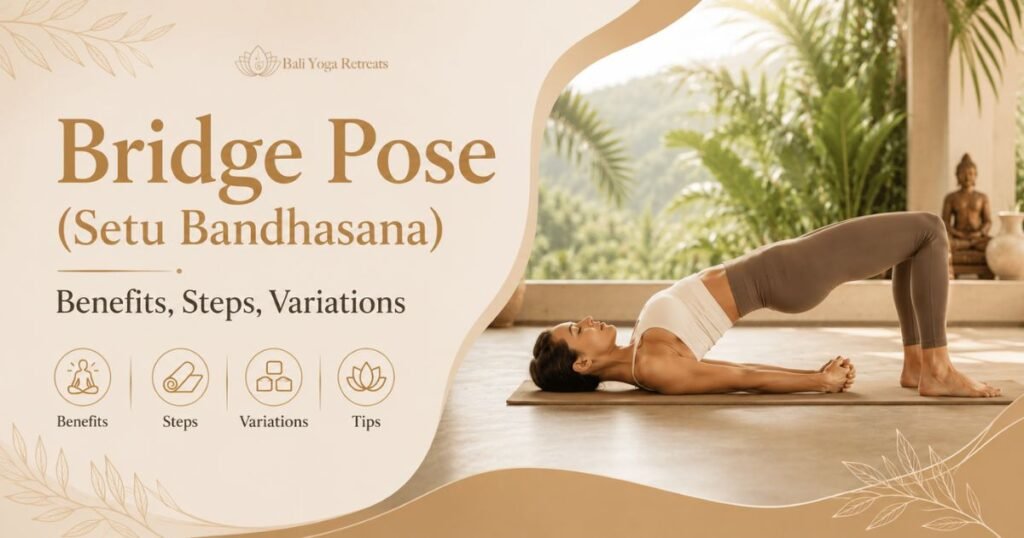
Table of Contents
- Historical Mentions of Bridge Pose
- What is Bridge Pose (Setu Bandhasana)?
- How to Do Bridge Pose?
- Bridge Pose Benefits (Setu Bandhasana)
- 1. Makes Your Legs and Hips Stronger
- 2. Opens Up Your Chest and Shoulders
- 3. Quietly Builds Your Core
- 1. Melts Away Stress and Anxiety
- 2. Helps Your Body Relax Deeply
- 3. Sharpens Your Focus
- Advanced Bridge Pose Variations
- 1. Single-Leg Elevated Bridge Pose
- 2. Bridge Pose Walkout
- 3. Elevated Bridge Pose
- Who Should Practise the Bridge Pose?
- Contraindications and Safety Tips
- Conclusion
- Frequently Asked Questions
- How long should I hold the Bridge Pose?
- Does Bridge Pose help with back pain?
- Why does my neck feel pressure during the Bridge Pose?
- Is Bridge Pose safe during pregnancy?
- Can the Bridge Pose help with weight loss?
- Can beginners use props in Bridge Pose?
Setu Bandha Sarvangasana, or bridge pose, is one of yoga’s powerful and beginner-friendly poses. It looks simple, just lifting your hips off the floor, but in reality, it works your entire body, calms your mind and lifts your energy all at once.
What most people don’t know is that holding this pose for just 30 seconds activates over 10 major muscle groups simultaneously. It improves blood flow to the brain and triggers the body’s natural relaxation response, making you feel both energised and calm at the same time.
In this blog, we’ll walk you through everything – its history, how to do it correctly, its benefits, and powerful variations to deepen your practice. Your journey to a stronger, calmer and more balanced self starts right here.
Historical Mentions of Bridge Pose
The posture known today as Bridge Pose (Setu Bandha Sarvangasana) actually appears in a much older Indian yoga manuscript from the 19th century. In that text, it is referred to as “Kāmapīṭhāsana”, showing that the pose was practised long before modern yoga teachers wrote about it.
This early reference comes from the Sritattvanidhi, a large manuscript compiled in the Mysore Palace before 1868. In this document, many yoga poses are described and illustrated, including this early form of Bridge Pose, The Yoga Tradition of the Mysore Palace
Today, the pose is known as Setu Bandha Sarvangasana in modern yoga, but its presence in the Sritattvanidhi proves that this backbend was part of traditional yoga practice in India long before it was popularised in modern times.
What is Bridge Pose (Setu Bandhasana)?
Bridge Pose is honestly one of the most beautiful poses in yoga because of what it quietly does for you. You simply lie on your back, press your feet gently into the ground, and lift your hips and chest up toward the sky. Yet in that one simple movement, your chest opens up, your spine gets a stretch, and your legs and glutes grow stronger.
What makes it even more special is the meaning hidden inside its Sanskrit name:
- Setu – Bridge
- Bandha – Lock or bind
- Sarvangasana – All-limbs pose
So Setu Bandha Sarvangasana is a pose that connects and supports your whole body—like a bridge linking strength, flexibility, and energy. It’s gentle enough for beginners but powerful enough to strengthen and energise your entire body.
How to Do Bridge Pose?
Do not worry; this is simpler than it looks. Here is how to do it, one gentle step at a time:
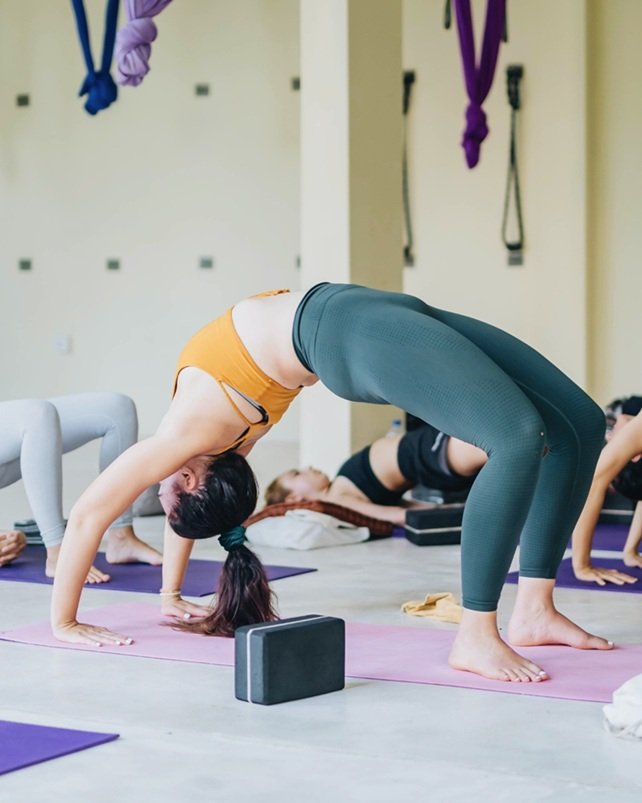
- Lie down on your back on a yoga mat. Bend your knees and place both feet flat on the floor, roughly hip-width apart. Let your arms rest softly by your sides with your palms facing down. Take a moment to settle in and relax. Practising a few rounds of Surya Namaskar before Bridge Pose can help warm up the spine, hips and shoulders.
- Take a deep breath in. As you breathe out, gently begin to lift your hips up toward the sky. There is no rush; just let it rise naturally.
- Link your fingers together beneath your lower back.
- Keep both knees pointing forward and in line with each other. Give your glutes a soft squeeze.
- Stay here for 30 seconds to 1 minute. Keep breathing slowly and steadily. Feel your chest gently open and your spine stretch and lengthen with every breath. Enjoy this moment — your body is doing something wonderful.
When you are ready to come down, release your hands, breathe out slowly and lower your back to the mat nice and easy. Rest for a moment and repeat 2 to 3 times.
Bridge Pose Benefits (Setu Bandhasana)
Think of Bridge Pose as a full reset button for your body and mind. It looks simple; you just lift your hips off the floor, but what happens inside when you do it regularly is really quite remarkable.
What It Does For Your Body?
1. Makes Your Legs and Hips Stronger
When you lift your hips in this pose, your glutes (hip muscles), thighs and the back of your legs all work together to hold your body up. Do this regularly, and those muscles get noticeably stronger.
Why does that matter? Because stronger legs and hips mean:
- Your lower back gets better support
- You move through your day with less effort and pain
- Every day, things like climbing stairs or carrying bags feel easier
And if you sit at a desk all day, this pose is perfectly made for you. Sitting too much makes these muscles weak and inactive — Bridge Pose helps “wake them up” again.
2. Opens Up Your Chest and Shoulders
As your hips rise, your chest naturally lifts, and your shoulders roll back. This simple movement does a lot:
- Reducing a hunched or rounded back
- Allowing deeper, easier breathing, similar chest-opening effects can also be experienced through the Cobra Pose benefits in yoga practice.
- Releasing tension in the neck, shoulders and upper back
If you’ve ever felt that tight, heavy feeling across your shoulders after a long day, this pose directly targets that.
3. Quietly Builds Your Core
This one surprises people. The Bridge Pose looks like a back exercise, but your core muscles are working hard to keep you stable and balanced.
Over time, this means:
- A stronger and more stable core
- Better posture
- Reduced lower back pain
The strength builds gradually — you may not feel it immediately, but it makes a big difference over time.
What It Does For Your Mind
1. Melts Away Stress and Anxiety
Opening your chest while breathing deeply has a calming effect on your mind. Bridge Pose is often called a “heart-opening pose” and many people feel more relaxed after holding it.
You may notice:
- A lighter, calmer feeling
- Reduced emotional tension
- A sense of relaxation after just a short time
2. Helps Your Body Relax Deeply
When you are stressed, your body stays tense and alert. Bridge Pose, combined with slow breathing, tells your body to relax.
This helps to:
- Slow down your heart rate
- Reduce stress hormones
- Bring your body into a calm, restful state
That’s why it’s a great pose to practise in the evening or before sleep.
3. Sharpens Your Focus
Holding Bridge Pose requires attention; you stay aware of your breath, balance, and body position.
With regular practice, this improves:
- Concentration
- Mental clarity
- Your ability to stay present
It’s a simple way to train your mind while also strengthening your body.
Advanced Bridge Pose Variations
1. Single-Leg Elevated Bridge Pose
What It Is
Imagine Bridge Pose, but with one leg reaching toward the ceiling while the other does all the work. That’s this variation. It sounds simple, but it asks a lot from your body in the best possible way.
How to Do It:
Start in your regular Bridge Pose with hips lifted. Once you feel steady, slowly extend one leg straight up or forward, keeping both hips level. Hold it there, breathe, then gently switch sides.
Key Benefits:
- Builds glute and hamstring strength one side at a time
- Challenges your core to work harder for balance
2. Bridge Pose Walkout
What It Is
This one is dynamic and surprisingly sneaky. You walk your feet slowly away from your body while keeping your hips lifted, and your muscles have to fight to keep everything from collapsing. It’s deceptively hard in the best way.
How to Do It:
Begin in Bridge Pose with hips raised. Then, inch by inch, slowly walk your feet forward away from you, keeping those hips up the entire time. Go as far as you comfortably can, then walk them back in.
Key Benefits:
- Fires up the core to keep everything stable
- Improves your coordination and body awareness
3. Elevated Bridge Pose
What It Is:
By simply placing your feet on a raised surface, a yoga block, a step, or a low bench, you increase the range of motion your hips travel through. More range means more muscle activation and more results.
How to Do It:
Lie on your back and rest your feet on a block or a bench. From there, press down and lift your hips as high as they’ll go. Hold the top position, feel the burn, then lower yourself back down with control.
Key Benefits:
- Improves hip mobility and range of motion
- Adds serious intensity without needing complex balance skills
Who Should Practise the Bridge Pose?
The bridge pose is suitable for:
- A complete beginner who is just starting to explore what yoga feels like
- An office worker whose back and hips are quietly suffering from too many hours in a chair
- Someone dealing with mild back discomfort and searching for gentle, natural relief
- A yoga student who wants to steadily build real strength and flexibility over time
This pose has something meaningful to offer you. It’s simple, adaptable, and slots into almost any yoga routine without ever feeling out of place.
Contraindications and Safety Tips
Avoid or modify the bridge pose if you have:
- A neck injury of any kind
- Severe or ongoing back pain
- Recently had surgery, especially around the back, hips, or abdomen.
If you do practise it, just keep these simple reminders close:
- Warm up before you begin; a few gentle stretches for your spine, hips, and legs help your body ease in safely rather than jumping in cold.
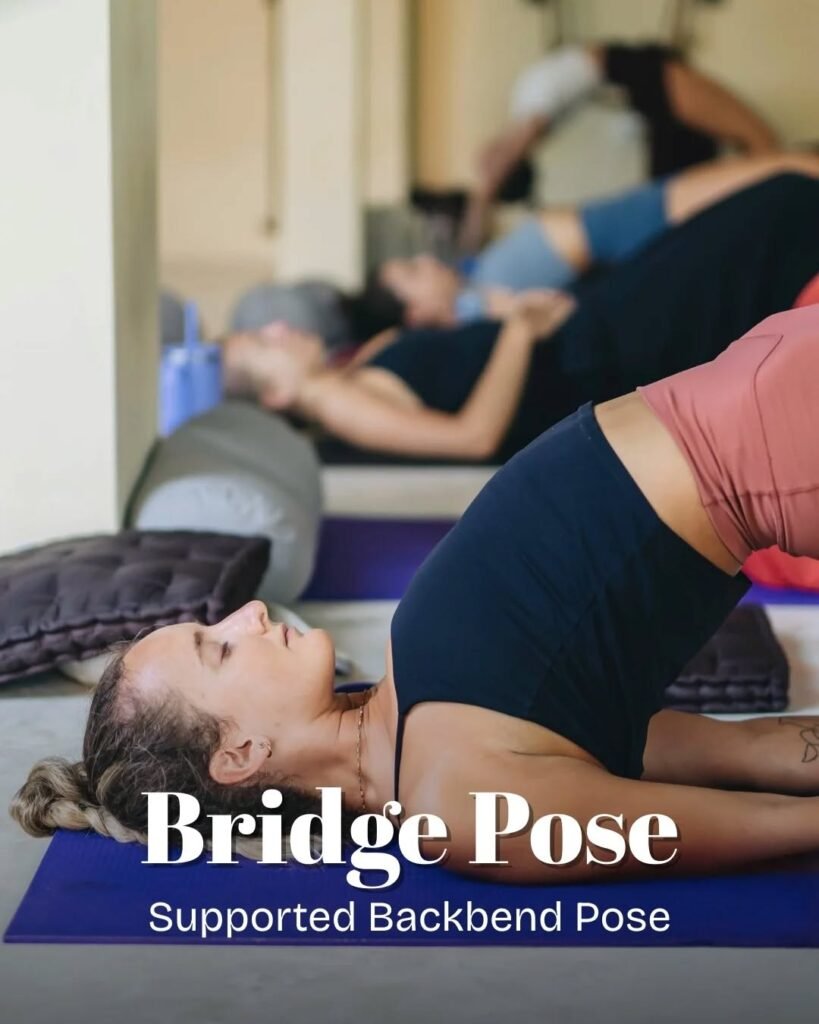
- If the pose ever feels too intense, tuck a yoga block or folded blanket under your hips for support — it’s a tiny adjustment that makes a genuinely big difference.
- Your body always knows best — listen to it, respect it, and it will take you so much further than you ever expected.
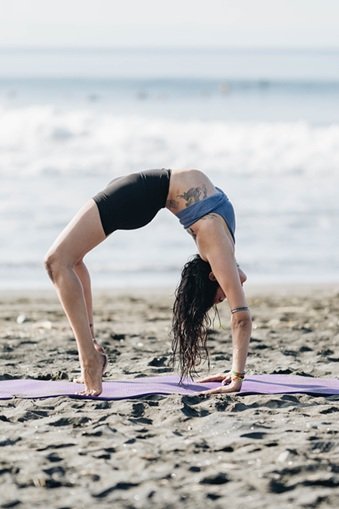
Difference Between Bridge Pose and Wheel Pose
| Aspect | Bridge Pose | Wheel Pose |
| Difficulty Level | Beginner to Intermediate | Advanced |
| Body Position | Bend back with shoulders and upper back on the floor | Full backbend with body lifted off the floor |
| Primary Benefits | Strengthen legs, improve posture and reduce stress | Builds full-body strength, increases flexibility and boosts energy. |
| Strength Requirement | Bend back with your shoulders and upper back on the floor | High [arms, shoulders, back and legs] |
| Balance Requirement | low | High |
| Best for Beginners | Yes, beginner-friendly. | No, it requires flexibility and preparation. |
| Risk Level | Low when done correctly | Higher if done without proper technique. |
Conclusion
Bridge Pose (Setu Bandhasana) is a powerful practice that combines strength, flexibility and inner calm. Each time you lift your hips, it activates your legs, glutes and core while also opening your chest. From gentle variation to its advanced types like Wheel Pose, this asana is perfect for beginners and experienced yogis.
The true magic lies in consistency; even a few minutes a day can improve your posture, enhance energy, and also develop a sense of balance within. At Bali Yoga Retreats, Bridge Pose remains one of the foundational yoga postures because it gently builds strength, improves flexibility and helps calm the mind.
So why wait? Roll out your yoga mat today, start with a few rounds of Bridge Pose, explore variations as you gain strength and feel your body and mind transform.
Frequently Asked Questions
How long should I hold the Bridge Pose?
Beginners can start with 15–20 seconds and gradually build up to 30–60 seconds. Just make sure your breathing stays easy and relaxed throughout.
Does Bridge Pose help with back pain?
Yes, it can. It strengthens the lower back and improves spinal support, which helps ease mild, everyday back pain. If you have a serious injury, though, it’s best to skip it for now.
Why does my neck feel pressure during the Bridge Pose?
Your weight is probably shifting onto your neck instead of your shoulders. Press firmly through your upper back and shoulders, and avoid turning your head while you’re in the pose.
Is Bridge Pose safe during pregnancy?
It’s generally fine in early pregnancy, but everybody is different. Always check with your doctor or a prenatal yoga teacher before trying it.
Can the Bridge Pose help with weight loss?
Not directly, but it builds strength in the legs, glutes and core, which supports a healthier metabolism over time.
Can beginners use props in Bridge Pose?
Absolutely. Placing a cushion under your hips makes the pose more comfortable and supportive while you’re still building strength.
This article is for general information and is not medical advice. If you have a respiratory or heart condition, are pregnant, or are unsure whether these practices suit you, please speak to your doctor before beginning.


 Call Us