

Downward Facing Dog Pose: Benefits, Steps & Easy Modifications
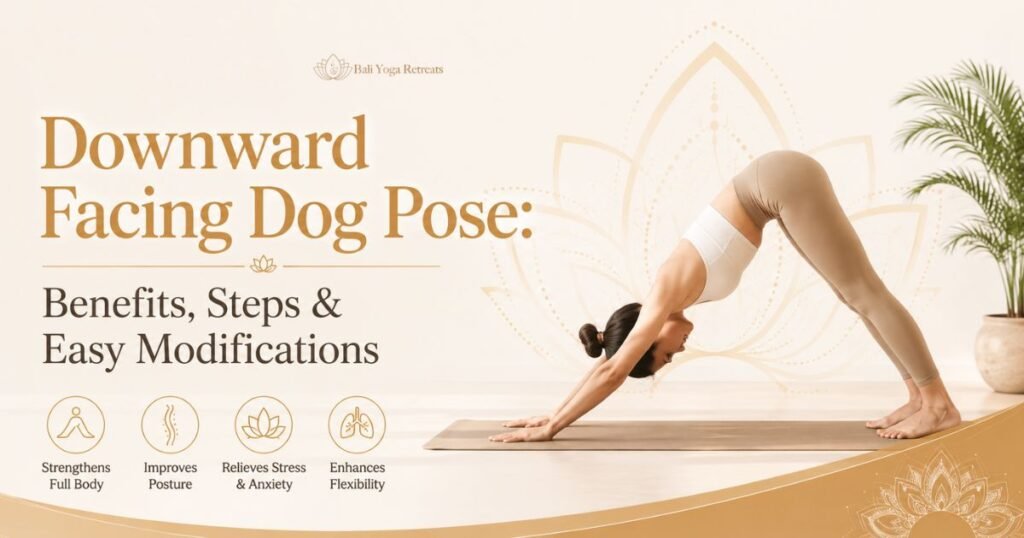
Table of Contents
- What is Downward Facing Dog?
- Why is Downward Facing Dog Pose An Essential Part of Vinyasa Yoga Practice?
- Downward Facing Dog Pose Benefits
- 1. Energy Boost
- 2. Core Activation
- 3. Opens Up the Chest
- 4. Spinal Length
- 5. Upper-Body Strength
- 6. Lower-Body Stretch
- 7. Better Body Awareness
- 8. Calmer Focus
- 9. Happy Feet
- 10. Hand and Finger Health
- 11. Natural Remedy for Desk-Work
- 12. Relieves Lower Back Tension
- 13. Gentle Shoulder Massage
- 14. Improves Balance
- 15. Healthy Digestion
- How to Do a Downward Facing Dog Pose?
- Modifications for and Variations of Downward Facing Dog Yoga Pose
- Downward Facing Dog Pose Variations
- 1. Three-Legged Dog
- 2. Wide-Legged Down Dog
- 3. Dog on Blocks
- 4. Chair Down Dog
- 5. Forearm Dog (Dolphin pose)
- 6. Heels-to-Wall Dog
- 7. Revolved Variation
- Downward Dog Pose Common Mistakes and Fixes
- When to Be Careful or Avoid the Downward Dog Pose?
- Real Practice Tips That Actually Help
- Signing Off
- Frequently Asked Questions About Downward Facing Dog
- 1. What is Downward Facing Dog in yoga?
- 2. What are the main benefits of Downward Dog?
- 3. What are the most common mistakes people make?
- 4. How do I stop my hands from slipping on the mat?
- 5. Does Downward-Facing Dog strengthen or stretch?
- 6. Why can’t I get my heels down in Adho Mukha Svanasana?
- 7. Where can I go to really master my alignment?
Downward Facing Dog, also called ‘Adho Mukha Svanasana‘ in Hindi, is one of the most recognised and widely practised yoga asanas, as it blends strength, stretch, breath, and reset in a single position. It appears frequently in Vinyasa flows and Sun Salutations, but the pose works best when the focus stays on a long spine, steady hands, and smart modifications rather than on forcing the heels down.
If there is one yoga pose almost everyone knows by name, it is the Downward Facing Dog. You will find it in beginner classes, power yoga, mobility-based sessions, and traditional flows. Still, many people do not feel fully comfortable in it at first.
The Downward Facing Dog pose looks simple, yet it asks for strength in the arms, stability in the shoulders, length in the spine, and openness through the backs of the legs.
Here we’ll explain how to do Downward Facing Dog in a way that feels clear, practical, and safe. We’ll also cover Downward Facing Dog pose benefits, common mistakes, easy fixes, and useful Downward Facing Dog pose variations.
What is Downward Facing Dog?
Downward Facing Dog is the English name for ‘Adho Mukha Svanasana’. Originally, it comes from Sanskrit, and the name breaks down as follows:
| Word | Meaning |
| ‘Adho’ | Downward |
| ‘Mukha’ | Face |
| ‘Svana’ | Dog |
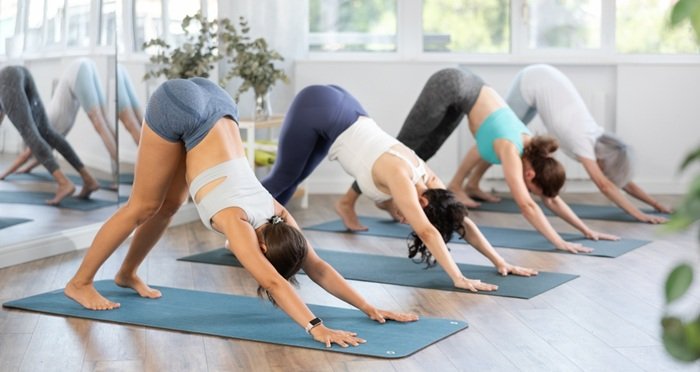
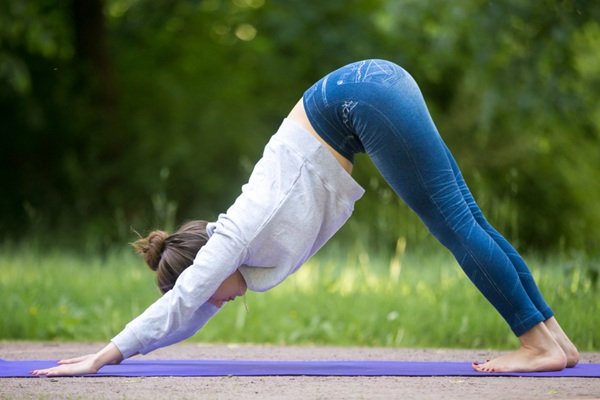
The pose looks like and is practised as an inverted V-shape with the hands pressed into the mat, hips lifted up and back, and the spine stretched straight between arms and legs.
The Downward Facing Dog asana is fundamental to Vinyasa practice since it serves as a transition and a strengthening posture. It provides a brief resting space between rigorous movements and is also a powerful stretch for the hamstrings, calves, shoulders, chest, and back when practiced with proper alignment.
Why is Downward Facing Dog Pose An Essential Part of Vinyasa Yoga Practice?
When you push the earth away in Adho Mukha Svanasana, you stop carrying the weight in your wrists and start lifting your energy toward the sky.
– Guru Yogi VIshnu Panigrahi
In modern Vinyasa classes, Adho Mukha Svanasana, or the Downward-Facing Dog exercise, appears again and again because it links movement with breath (and rest).
Downward Dog can reset the body after a plank, prepare the legs for lunges, and provide a pause inside any flowing sequence. When students learn Adho Mukha Svanasana with care, they often get better at not only this pose but also many others that depend on shoulder stability, spinal awareness, and balanced effort.
A thoughtful yogic environment, including immersive yoga training or relaxing retreats, can help aspiring or regular practitioners understand the connection between poses more deeply rather than just repeating a shape.
Downward Facing Dog Pose Benefits
The reason this yoga pose stays so popular is simple. It gives a lot back when done well. Downward Facing Dog pose benefits include a full-body revamp, stronger shoulders, arms and spine, and more awareness of posture and body alignment.
Here is what the Downward-Facing Dog yoga pose may support:
1. Energy Boost
Getting your head below your heart sends fresh blood and oxygen to your brain.
2. Core Activation
Drawing your belly button in to support your lower back tones and engages your stomach muscles.
3. Opens Up the Chest
Broadening your shoulders in the pose stretches the front of your chest.
4. Spinal Length
Encourages the spine to lengthen and helps create space through the back body.
5. Upper-Body Strength
Builds strength in the hands, wrists, arms, and shoulders as you press the floor away.
6. Lower-Body Stretch
Stretches the hamstrings, calves, ankles, and backs of the legs.
7. Better Body Awareness
Teaches alignment through the shoulders, rib cage, hips, knees, and feet.
8. Calmer Focus
Can feel steadying and mentally settling when paired with slow breathing.
9. Happy Feet
It stretches the arches of your feet and toe joints, which helps ease the pain of standing or walking all day.
10. Hand and Finger Health
Spreading your fingers wide and pressing down builds grip strength and keeps hand joints flexible.
11. Natural Remedy for Desk-Work
It directly reverses the hunched-forward posture from looking at screens all day.
12. Relieves Lower Back Tension
By lifting your hips high, it takes the weight off your lower spine, easing chronic aches.
13. Gentle Shoulder Massage
Moving your shoulder blades down your back helps release the tight knots people often get from stress.
14. Improves Balance
Because your weight is split between your hands and feet, it teaches your brain how to balance evenly on all fours.
15. Healthy Digestion
The gentle upside-down positioning acts like a soft massage for your abdominal organs.
A useful way to think about the Downward Facing Dog stretch is that it combines effort and release at the same time. Your arms stay active, legs grounded down, and your spine lengthens. These are the reasons why Adho Mukha Svanasana feels energising and centring at the same time.
How to Do a Downward Facing Dog Pose?
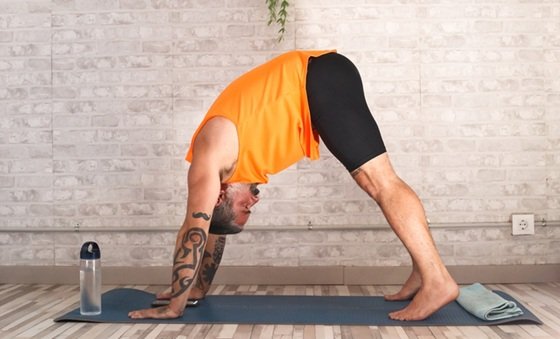
If you want better outcomes from your Adho Mukha Svanasana yoga, stop chasing the perfectly correct shape and build the pose in steps. Always remember that a pose done with proper alignment matters more than straight legs, flat heels, or a right gaze.
Downward Facing Dog Pose Steps:
- Start on your hands and knees with your hands about shoulder-width apart and your knees under your hips
- Spread your fingers and press through the hand, especially the knuckles, so you do not force all the weight into your wrists
- Bring your toes under
- As you exhale next, slowly raise your knees over the mat
- Send your hips up and back to make an inverted V-shape
- If your back rounds or your hamstrings feel tight, keep a bend in your knees initially
- Lengthen your spine before you try to straighten your legs
- Let your head stay relaxed between your arms while your neck is long
- Keep your feet about hip-width apart and your hands steady and grounded
- Breathe slowly for a few breaths, then lower down with control
One of the best cues for Adho Mukha Svanasana, or the Downward Facing Dog pose, is this: Lift your body from the hips, not from the shoulders. When the hips move up and back, the posture starts to feel lighter and more breathable.
Modifications for and Variations of Downward Facing Dog Yoga Pose
The best Downward Facing Dog pose variations are the ones that make the posture more accessible and useful for your body today. Common modifications include bending the knees if your hamstrings are tight, and using props such as a blanket or blocks to reduce pressure and improve comfort if your wrists are painful.
Some Beginner-friendly Adho Mukha Svanasana modifications are the following:
- Bend both knees to help lengthen the spine first
- Keep the heels lifted if your calves or hamstrings are tight
- Practice the shape with the hands on blocks or at the wall to reduce wrist load and understand the shoulder action more clearly
- Shorten the hold time and come out before the shoulders collapse
- Pedalling the feet is helpful as a gentle warm-up for the calves and backs of the legs
- Bent-knee Downward Dog is useful for beginners and anyone working on spinal length
- The Wall Dog is especially helpful for learning alignment with less weight on the wrists and shoulders
Downward Facing Dog Pose Variations
1. Three-Legged Dog
Lifting one leg high behind you is a fun way to build extra strength in your arms and core while stretching the hip of your standing leg.
2. Wide-Legged Down Dog
Taking your feet out to the very edges of your mat creates more space in your pelvis and makes the hamstring stretch feel a bit more relaxed.
3. Dog on Blocks
Placing yoga blocks under your hands takes the pressure off tight shoulders and wrists, making it much easier to lift your hips up and back.
4. Chair Down Dog
Doing Adho Mukha Svanasana with your hands on the seat or back of a sturdy chair is perfect for a quick midday stretch at work without getting on the mat.
5. Forearm Dog (Dolphin pose)
Lowering your elbows to the mat gives your wrists a complete break while building strength around your shoulders.
6. Heels-to-Wall Dog
Stepping your back feet up against a wall gives you a solid surface to press into. It helps you understand how to push your weight back into your legs.
7. Revolved Variation
This Downward Dog pose variation adds a level of twist to the standard asana, increasing the challenge intensity. It suits more experienced practitioners.
For students who want to move beyond basic classes and understand why these modifications work, learning pose breakdowns in a structured setting can be a major next step. Schools such as Bali Yoga Retreats, which offer yoga teacher training and retreats in Bali, naturally fit into that journey because alignment, breath, and practice intelligence matter as much as flexibility.
Downward Dog Pose Common Mistakes and Fixes
In Adho Mukha Svanasana, many people assume that the goal is to get the heels to the floor. While in reality, the ideal goal is to create length through the spine. For many beginners, keeping the knees bent is not a shortcut. It is the smarter version of the pose.
| Common Mistake | What To Do Instead |
| Forcing the heels down | Prioritise a long back and allow the heels to stay lifted if needed |
| Locking the knees | Keep a soft bend so the pelvis and spine can move more freely |
| Collapsing into the wrists | Spread the fingers and press through the hands evenly |
| Shaky shoulders | Push the floor away and keep space between your shoulders and ears |
| Rounding the back | Bend the knees and draw the chest toward the thighs to find more spinal length |
| Hands or feet set too close | Make enough distance so the body can create a clear inverted V-shape |
Addressing what’s important and what’s not is where patient teaching matters. In a good yoga setting, students are reminded that the Downward Facing Dog pose benefits come from sound form, not from forcing flexibility.
The same idea is central in quality teacher training as well, where learning how to break down a pose matters just as much as doing it.
When to Be Careful or Avoid the Downward Dog Pose?
Downward Facing Dog pose, or Adho Mukha Svanasana, is helpful, but it is not right for everybody in every moment. People with wrist, shoulder, ankle, knee, hip, or spine injuries may need to avoid it or modify it. We also advise caution or avoidance for people with high blood pressure, vertigo, heart conditions, carpal tunnel syndrome, migraine, epilepsy, and late-stage pregnancy.
Note that this does not mean the yoga Downward-Facing Dog is bad. It means context matters! A well-taught yoga practice respects limitations, offers options, and knows when another shape is the better choice.
Real Practice Tips That Actually Help
Downward Dog yoga asana begins the moment you stop fighting stubborn muscles and start breathing into them.
– Guru Yogi Vishnu Panigrahi
If the Downward Facing Dog stretch feels hard, the answer is usually not to push more. It is to organise the posture better.
Try practising with these practical cues:
- Press the floor away to create space in the shoulders.
- Lift the hips up and back rather than shifting too far forward.
- Bend the knees before you straighten the legs.
- Think long spine first, straight legs second.
These minor (yet big) alterations change everything. Once the pose stops being a fight with your body, it starts becoming a reliable part of your practice.
Signing Off
Downward Facing Dog is common in practice for a reason. It teaches strength, length, balance, patience, and better body awareness in one compact, dynamic posture.
For beginners and new practitioners, the real key is not to force it. But to learn the pose step by step, use modifications and variations when needed, and let the form support and enhance the physique you have today.
For students who want to explore yoga beyond one pose, guided learning through yoga teacher training courses or short-term retreats with Bali Yoga Retreats in Ubud, Bali can be a meaningful way to deepen both practice and understanding. You can have a career in teaching yoga and serve a wide variety of people, learn among international students, and gain recognition from a globally reputed yoga school (Yoga Alliance RYS registered). Reach out to us today!
Frequently Asked Questions About Downward Facing Dog
1. What is Downward Facing Dog in yoga?
Downward-facing dog is a yoga pose also called ‘Adho Mukha Svanasana’. It is an inverted V-shape position that strengthens the upper body and stretches the spine, hamstrings, calves, and shoulders.
2. What are the main benefits of Downward Dog?
Known traditionally as Adho Mukha Svanasana, this pose is helpful for building upper-body strength and stabilising your spine. It also gives the backs of your legs a deep stretch while helping you focus your mind and find your balance.
3. What are the most common mistakes people make?
A few things to watch out for are rounding your spine, forcing your heels to touch the floor, or locking out your knees. People also tend to dump all their weight into their wrists or lift their shoulders up toward their ears.
4. How do I stop my hands from slipping on the mat?
Slipping usually happens if your mat lacks grip or if your weight is shifting far forward. Try pushing your hips further back to take the weight off your hands, or look into getting a non-slip yoga mat or yoga towel to lay over the mat.
5. Does Downward-Facing Dog strengthen or stretch?
Honestly, it does both. It strengthens the arms, shoulders, and legs while stretching the spine, calves, hamstrings, and chest.
6. Why can’t I get my heels down in Adho Mukha Svanasana?
Because tight calves and hamstrings often limit that action. Your heels do not need to touch the floor for the pose to be correct.
7. Where can I go to really master my alignment?
Working under an experienced teacher at a yoga school or a dedicated retreat makes a huge difference. If you want to dive deep into alignment, breathwork, and personalised adjustments, look into the yoga teacher training courses and retreats hosted by Vinyasa Yoga Academy in India and Bali.
This article is for general information and is not medical advice. If you have a respiratory or heart condition, are pregnant, or are unsure whether these practices suit you, please speak to your doctor before beginning.


 Call Us