


5 Pranayamas That You Should Make a Part of Your Daily Life
Table of Contents
- What Is Pranayama?
- 5 Easy Pranayamas That You Should Make a Part of Your Daily Life
- 1. Anulom Vilom
- 2. Kapalabhati
- 3. Bhramari Pranayama
- 4. Ujjayi Pranayama
- 5. Sheetali Pranyama
- General Safety Rules Everyone Should Follow
- Your Simple Daily Pranayama Plan
- Final Takeaway
- Frequently Asked Questions (FAQs) About Pranayama
- 1. What are the types of pranayama?
- 2. How long should I practice pranayama daily?
- 3. Can beginners do pranayama?
- 4. What is the best time to do pranayama?
- 5. Can pranayama help in weight loss?
In today’s fast-paced world, stress, anxiety and constant digital distractions have quietly become a part of our everyday life, and most of us don’t even realise how deeply they are affecting us. But here’s the good news, the solution has been with you all along, and it’s completely free, and it requires nothing more than a few quiet minutes and the breath you are already breathing every single day.
Pranayama, the ancient yogic art of conscious breathing, has been practised for centuries to restore balance, calm the mind and energise the body. The word itself means everything — “Prana” for life force and “Ayama” for expansion — together meaning the practice of expanding your vital energy through breath. These foundational practices are also deeply integrated into programs like a 200 Hour Yoga Teacher Training Bali, where breathwork plays a vital role in transforming both body and mind.
The real-world impact of these practices is increasingly evident. The Times of India reported the inspiring story of a 39-year-old battling long-term diabetes and high blood pressure, who experienced remarkable improvements in both conditions simply by making pranayama a part of his daily routine. Science is now catching up to what yogis have known for centuries — that when you learn to control your breath, you gain the power to transform your health, your mind, and your life.
In this blog, we bring you 5 powerful pranayama techniques that are simple, beginner-friendly and take just a few minutes a day because sometimes, the most powerful thing you can do for yourself is simply breathe with intention.
What Is Pranayama?
Pranayama is one of the most beautiful aspects of yoga and yet one of the most overlooked. Pranayama is simply the practice of conscious, intentional breathing. The word comes from ancient Sanskrit, where “Prana” means life force or vital energy, and “Ayama” means expansion or control. Put them together, and you get something truly profound — the practice of expanding and regulating your life energy through the power of breath.
In traditional yoga, your breath is considered a bridge, a direct connection between your physical body and your mind. When your mind is anxious and racing, your breath becomes short and shallow. When your mind is calm and focused, your breath becomes slow and deep.
This is exactly where pranayama becomes so powerful in a yoga practice. While physical postures (asanas) work on strengthening and opening the body, pranayama works on something deeper — it prepares and settles the mind. To deepen this understanding, you can also explore the benefits and types of meditation, which further help in calming the mind and enhancing inner awareness. It gently guides you from a state of restlessness, distraction, and mental noise into a place of quiet, clarity, and inner balance.
5 Easy Pranayamas That You Should Make a Part of Your Daily Life
1. Anulom Vilom
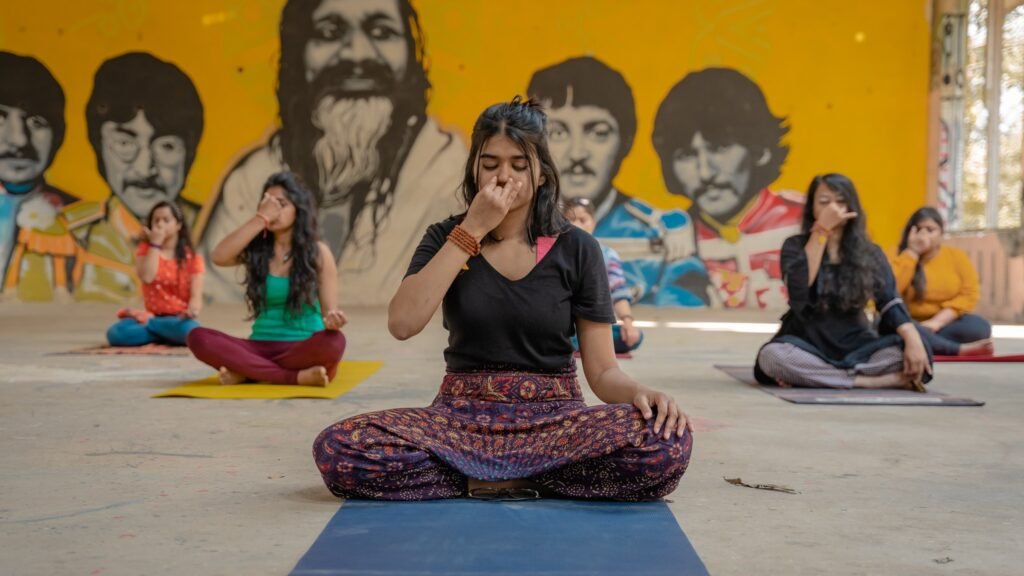
Anulom Vilom is a beginner-friendly pranayama technique. Think of this as a natural “balance switch” believed to harmonise your body’s energy channels. It involves breathing through alternate nostrils to create balance between the left and right hemispheres of the brain.
How to Do It:
- Sit comfortably cross-legged on a chair with your back nice and straight.
- Relax your shoulders and rest your left hand on your knee.
- With your right hand, fold your index and middle fingers inward.
- Close your right nostril with your thumb and breathe in slowly through the left.
- Now close the left nostril with your ring finger, release the right, and breathe out.
- Breathe in through the right nostril.
- Close the right, open the left and breathe out.
- That’s one full cycle, keep going.
Benefits:
- Calms the mind and melts away stress
- Balances your body’s energy flow
- Gives your lungs a good, healthy workout
2. Kapalabhati
Need a morning energy boost without sipping on coffee? Kapalabhati is all about rhythmic exhales that cleanse your lungs and wake your entire system. The name itself means Skull Shining in Sanskrit because regular practice is said to bring a natural glow to your face and brightness to your mind.
How to Practice:
- Sit up straight and comfortably.
- Take one deep breath in to begin.
- Now start pushing air out forcefully by pulling your belly button inward.
- Let your inhale happen naturally, don’t force it.
- Keep a steady rhythm and start with 20–30 pumps.
Benefits:
- Flushes out toxins from your lungs
- Fires up your digestion and metabolism
- Supports healthy weight management
- Gives you an instant energy and alertness boost
3. Bhramari Pranayama
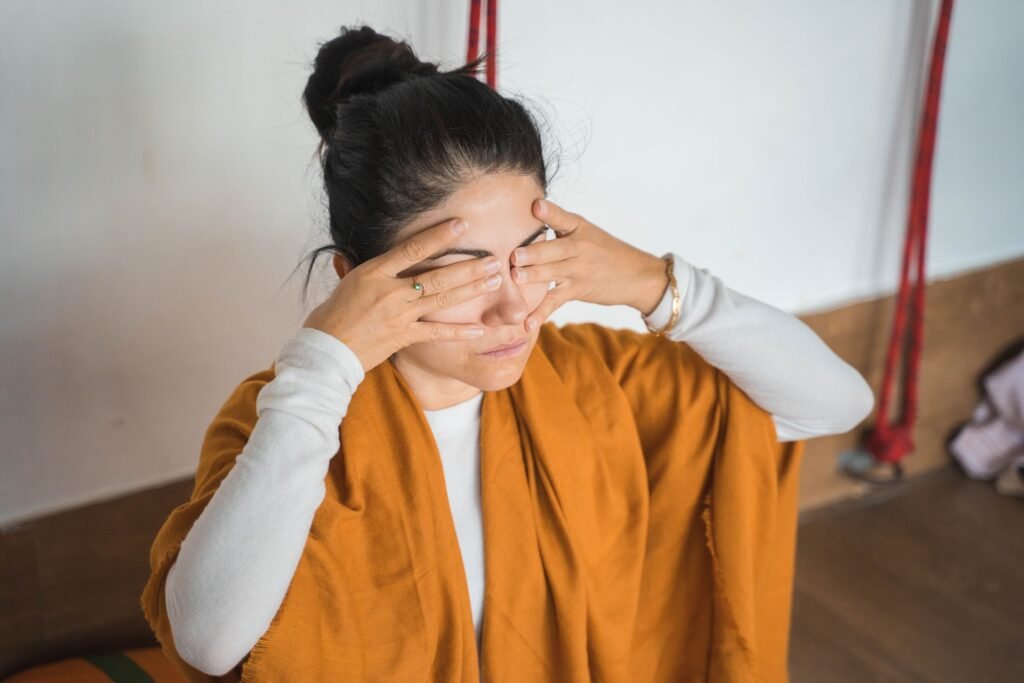
Yes, you are going to hum like a bee, and it’s wonderful! Bhramar pranayama involves making a gentle humming sound as you breathe out, sending calming vibrations through your whole body. The word Bhramari comes from the Sanskrit word for the Indian black bee, which gives you almost immediate relief from stress and anxiety.
How to Do It:
- Sit comfortably and close your eyes.
- Lightly place your index fingers over your ears.
- Breathe in deeply through your nose.
- As you exhale, make a soft “hmmmm” sound like a bee.
- Feel the vibration through your head and chest.
Benefits:
- Instantly melts anxiety and stress.
- Helps you fall asleep faster and sleep better
- Soothes your nervous system
- Boosts your concentration and emotional balance
4. Ujjayi Pranayama
Ujjayi pranayama creates an ocean wave sound right in your throat. It’s widely practised during Vinyasa and Ashtanga yoga to keep you focused and balanced. The Name ujjayi translates to ‘victorious’ in Sanskrit, symbolising a sense of inner strength.
How to Do It:
- Sit comfortably or flow right into your yoga practice.
- Breathe in deeply through your nose.
- Slightly tighten the back of your throat — like you’re about to fog up a mirror, but with your mouth closed.
- Breathe out slowly through your nose, keeping that gentle throat squeeze.
- Listen to the soft, wave-like sound and let it guide your rhythm.
Benefits:
- Keeps your mind sharp and present
- Warms up the body from within
- Builds stamina during yoga sessions
- Keeps your breathing smooth and steady
5. Sheetali Pranyama
Feeling hot or angry? Sheetali is the technique that actually lowers your body temperature and brings a wave of calm from the inside out. It is similar to the snake-hissing sound which snakes use to digest food and breathe through their mouths. What’s more interesting about this pranayama is that you breathe in through your mouth, making it stand out from the rest.
How to Do It:
- Sit comfortably with your spine tall and relaxed.
- Roll your tongue into a tube shape.
- Inhale slowly and deeply through your rolled tongue, like sipping through a straw.
- Close your mouth and breathe out gently through your nose.
- Repeat for several rounds and feel the coolness spread through you.
Benefits:
- Cools your body down quickly and naturally
- Eases stress, irritability, and anger
- Soothes acidity and digestive discomfort
- Leaves you feeling calm, fresh, and relaxed
General Safety Rules Everyone Should Follow
- Stop immediately if you feel dizzy, lightheaded, or uncomfortable at any point.
- Always consult your doctor before starting if you have any chronic health conditions.
- Learn from a certified yoga teacher if you are an absolute beginner — proper guidance makes a huge difference.
- Never force your breath — pranayama should always feel gentle and natural.
- Never practice on a full stomach — always wait at least 2 hours after eating.
Your Simple Daily Pranayama Plan
Here is a simple, easy-to-follow daily routine that fits perfectly into any schedule — whether you’re a busy professional, a student, or a homemaker. Just 25 to 30 minutes spread across your day is all it takes to start experiencing real, lasting change.
| Time of Day | Pranayama Practice | Duration | Purpose |
| Morning | Kapalabhati+ Anulom Vilom | 10-15 minutes | Energise your body, clear your mind, and set a positive tone for the day |
| Afternoon | Ujjayi | 5 minutes | Reset your focus, beat the midday slump and recharge. |
| Evening | Bhramari + Sheetali Pranayama | 10 minutes | Release the stress of the day, cool down your body, and prepare for restful sleep |
Final Takeaway
As you have discovered through this guide, these five pranayama practices are so much more than simple breathing exercises—they are a complete and powerful system of self-care that works on your body, mind and emotions all at once
With consistent practice, even just a few minutes each morning or evening can begin to quietly shift everything — the way you respond to stress, the way you think through problems, and the way you carry yourself through the difficult moments that life inevitably brings. Small daily breaths adding up to beautiful life changes.
So let your breath become your most trusted companion through every high and every low. On the days when everything feels too heavy, too fast, or too much
Sit down, close your eyes and simply breathe.
Frequently Asked Questions (FAQs) About Pranayama
1. What are the types of pranayama?
Common pranayama types include Anulom Vilom, Kapalabhati, Bhramari, Ujjayi and Sheetali.
2. How long should I practice pranayama daily?
Beginners can start with 10–15 minutes of pranayama breathing daily.
3. Can beginners do pranayama?
Yes, beginners can practice simple pranayama yoga techniques like Anulom Vilom and Bhramari.
4. What is the best time to do pranayama?
Early morning on an empty stomach is the best time for pranayam.
5. Can pranayama help in weight loss?
Yes, practices like Kapalabhati support metabolism and digestion.
This article is for general information and is not medical advice. If you have a respiratory or heart condition, are pregnant, or are unsure whether these practices suit you, please speak to your doctor before beginning.


 Call Us