


Headstand (Sirsasana): Benefits, Steps, & Tips
Table of Contents
- A Brief History of Headstand
- What is Headstand (Sirsasana)?
- Who Should Practise Headstand?
- Preparatory Poses for Headstand
- Step-By-Step Guide to Headstand
- 1. Forearm Plank
- 2. Forearm Plank Walk-Up
- 3. Head on Ground
- 4. One Knee to Chest
- 5. Egg Shape
- 6. One Leg Up / Both Legs Up
- Avoid Common Mistakes in Headstand
- Variations of Headstand
- Health Benefits of Sirsasana
- Can Sirsasana (headstands) Help Strengthen the Core and Upper Body?
- Headstand Pros: Repeating Headstands Can Result In
- Myths and Misconceptions About Headstand
- Conclusion
- Frequently Asked Questions
- 1. How long should a headstand be held for beginners?
- 2. Is it safe for everyone to do a headstand?
- 3. Does a headstand improve digestion?
- 4. Headstands to reduce stress and anxiety?
- 5. How many times do I need to practise headstand to get results?
- 6. Is it okay to do headstands at home?
Headstand, or Sirsasana, is considered the “King of Yoga Poses” because it offers numerous benefits to your body and mind. As one of the most significant inverted postures in yoga, it helps practitioners to switch, increase circulation, and enhance mental nimbleness. Sirsasana tones the shoulders, arms, abdominals, and spine while improving your posture, balance, and body awareness. The other benefits include mental and emotional stability because more blood to the brain can improve your concentration, calm your nerves, and even give you a clear head. Daily practising this pose can also help you gain confidence and discipline, because balancing upside down requires patience, control, and mindful breathing.
A Brief History of Headstand
Sirsasana is described in ancient yoga texts, such as the Hatha Yoga Pradipika, where it is celebrated as a powerful posture for boosting physical stamina and spiritual growth. After decades of practising, yogis regarded it as a pose that stimulates energy flow, awakens the mind, and keeps the body in a relaxed state for deep meditation. Over time, Sirsasana has become a cornerstone of modern yoga, admired not only for its ability to improve balance and stability but also for its calming effect on the mind.
What is Headstand (Sirsasana)?
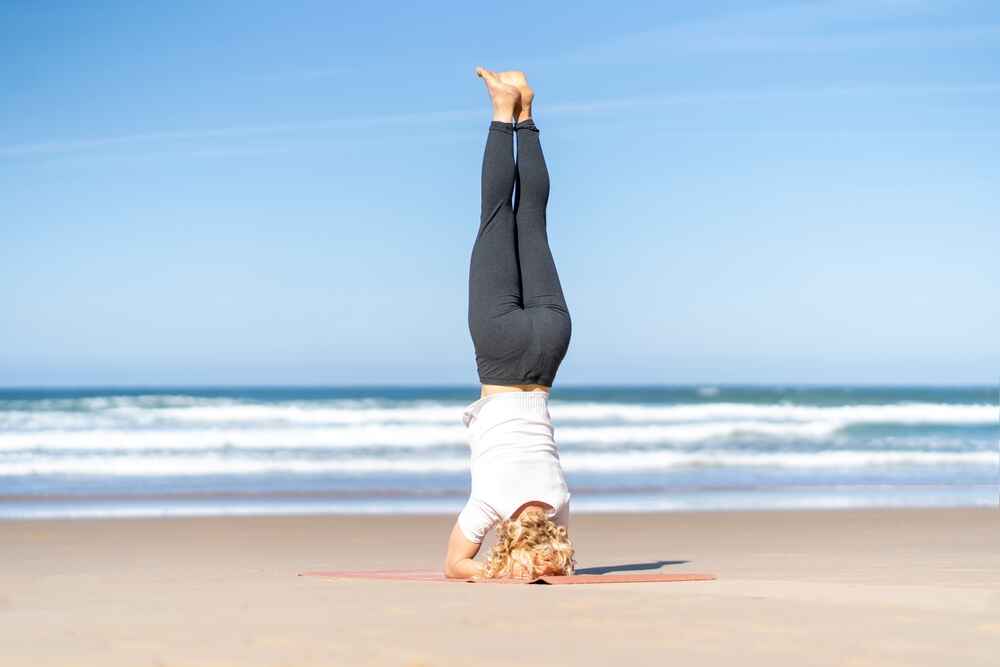
Sirsasana, commonly known as Headstand, is a well-known upside-down yoga pose in which the body is balanced upside down on the crown of the head, with the forearms and hands providing crucial support. The “Sirsasana” is a Sanskrit name made from 2 words: “Sirs“, meaning head, and “Asana“, meaning posture. In simple terms, sirsasana is an advanced overhead balance pose that presents strength, control, and the beauty of overcoming the fear of falling through physical and mental balance.
What makes this pose special is that it involves strength, balance, and mental concentration. To stay in a headstand, yogis are required to use their core, shoulders, and spine for support as they focus on calm, steady breathing. Regular practice of Sirsasana targets the inner part and increases focus, bringing clarity with confidence.
Who Should Practise Headstand?
Headstand is a very rewarding yoga pose, but it’s important to practise it with caution:
Ideal Practitioners:
- Intermediate and advanced yoga practitioners.
- Anyone who wants to improve upper-body and core strength.
- People wishing to enhance concentration and mental focus.
Contraindications:
- If you had recent neck or spinal injuries
- High blood pressure
- Glaucoma or eye conditions
- Heart problems
- Pregnant Women
Note: If you are a beginner, it’s recommended to practise under professional guidance and not push too hard.
Preparatory Poses for Headstand
Before trying out a headstand, you need to warm up and strengthen your body. We have mentioned some of the basic preparatory poses recommended by experienced yogis:
- Dolphin Pose (Ardha Pincha Mayurasana): Builds strength in the shoulders and upper back.
- Downward Dog (Adho Mukha Svanasana): Opens the shoulders and extends the spine.
- Forearm Plank: Engages the core while stabilising from the forearms.
- Cat-Cow Stretch (Marjaryasana-Bitilasana): Mobilises the spine and warms the neck muscles.
- Balasana (Child’s Pose): A nice, gentle resting pose directly before the inversion.
A 10–15-minute practice of these preliminary poses will help your head stand more safely and effectively.
Step-By-Step Guide to Headstand
We have divided the sequence into six sections, each highlighting a crucial point:
1. Forearm Plank
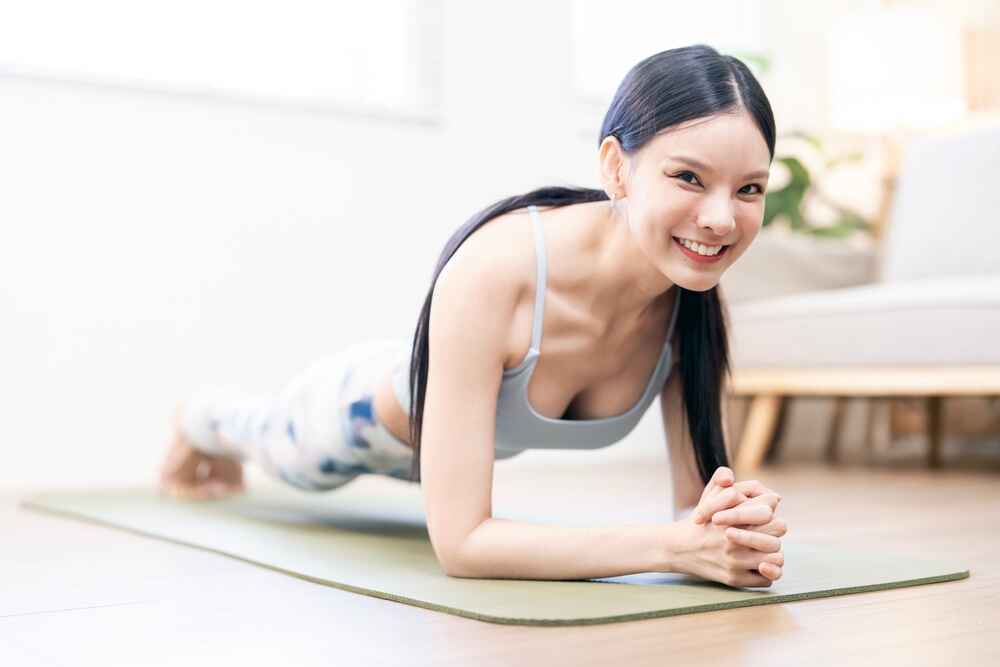
- Start in a forearm plank from your hands and knees, then lower to your forearms so your elbows are directly underneath your shoulders and your forearms are parallel to each other.
- Interlace hands, pressing forearms and hands into the mat.
- Step feet back, straightening legs.
- Engage your core, glutes, and quads; avoid arching your back.
- Keep the neck neutral and gaze at the floor.
- Hold for 30–60 seconds.
2. Forearm Plank Walk-Up
- From forearm plank, lift hips toward the ceiling (dolphin pose).
- Take small steps to bring your toes closer to your elbows, while keeping your breath calm and smooth.
- Continue for 30–60 seconds.
3. Head on Ground
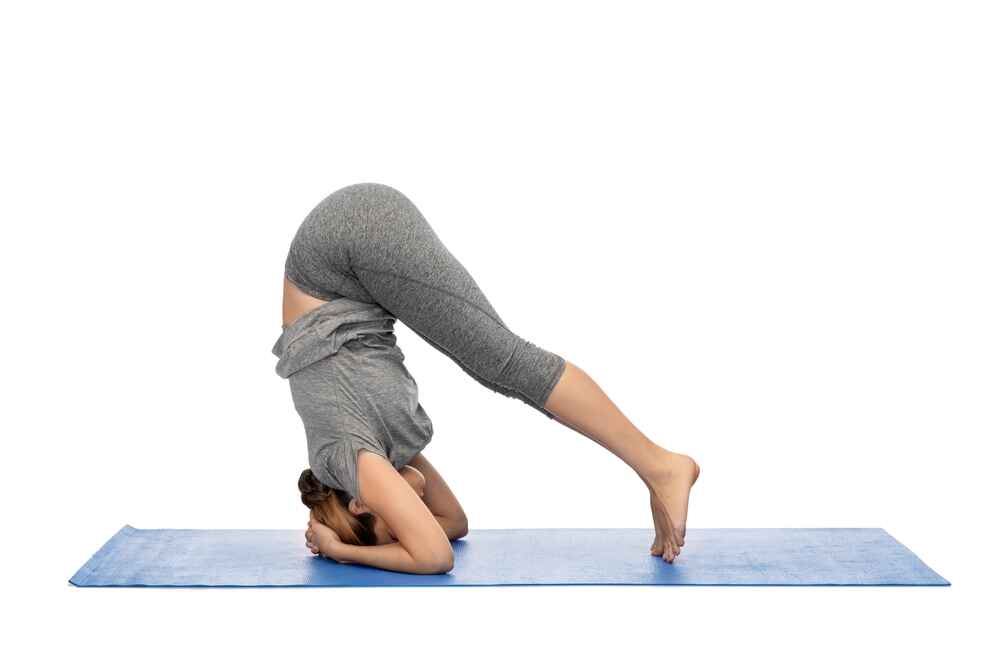
- Now lower your head to the mat.
- Hold the back of your head with your hands, elbows under your shoulders.
- Press into forearms, keep breathing evenly.
- Hold for 3–5 breaths.
4. One Knee to Chest
- From a head-on-ground position, lift your hips up and over your shoulders.
- Pull one knee to the chest, keeping the heel to the glute, with the other foot on the floor.
- Hold 3–5 breaths, then switch sides.
- Rest if needed before repeating.
5. Egg Shape
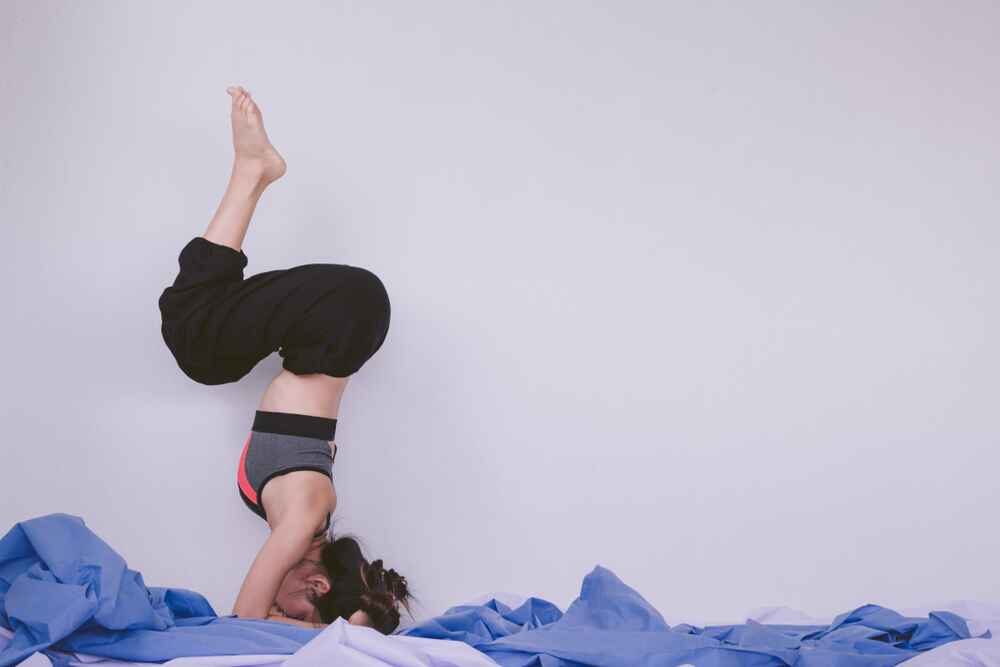
- From one knee to chest, lift your body by pressing onto the toes of the foot on the floor.
- If balanced, bring that knee to the chest, forming a compact “egg shape”.
- Hold 3–5 breaths, then lower slowly.
- Practise this to gain control before fully lifting the legs.
Tip: Only attempt a whole leg lift if you can maintain the egg shape without kicking.
6. One Leg Up / Both Legs Up
- Now extend one leg upward while holding the other in your chest.
- To lift both legs, squeeze inner thighs, and extend toward the ceiling.
- Engage core and glutes, and tuck pelvis slightly.
- Press forearms firmly to keep weight off your head.
Avoid Common Mistakes in Headstand
- Drop the shoulders or round the back
- Too much weight on the head, rather than the forearms and shoulders
- Hollowing or Inverting the back
- Not engaging core muscles
- Trying for too long without sufficient strength
- Correct these mistakes—stay safe, stay injury-free
Variations of Headstand
1. Beginner-Friendly Variations
- Wall-Supported Headstand: Provides stability for first attempts.
- Headstand with Yoga Blocks: Supports the shoulders and improves alignment.
2. Intermediate Variations
- Tripod Headstand: The hands and head form a tripod base for balance.
- Half-Lotus Headstand: Combines inversion with hip opening.
3. Advanced Variations
- Full Lotus Headstand (Padma Shirshasana): Combines headstand with full lotus leg position.
- Scorpion Headstand (Vrschikasana): Requires extreme flexibility and balance.
- Flying Headstand Transitions: Moving in and out of headstand smoothly for advanced flow practice.
Health Benefits of Sirsasana
There are many Shirshasana benefits, not just physical, but also mental and emotional advantages.
- Strengthens the shoulders and arms
- It helps reduce stress
- Enhances concentration and focus
- Shirshasana works on the pituitary gland, stimulating the function of all endocrine glands, which can help increase height
- Promotes better digestion
- Better blood circulation to the head and eyes
- It minimises the presence of fluids in the legs and feet
- Improves flexibility and balance
- Build confidence and improve overall body attention
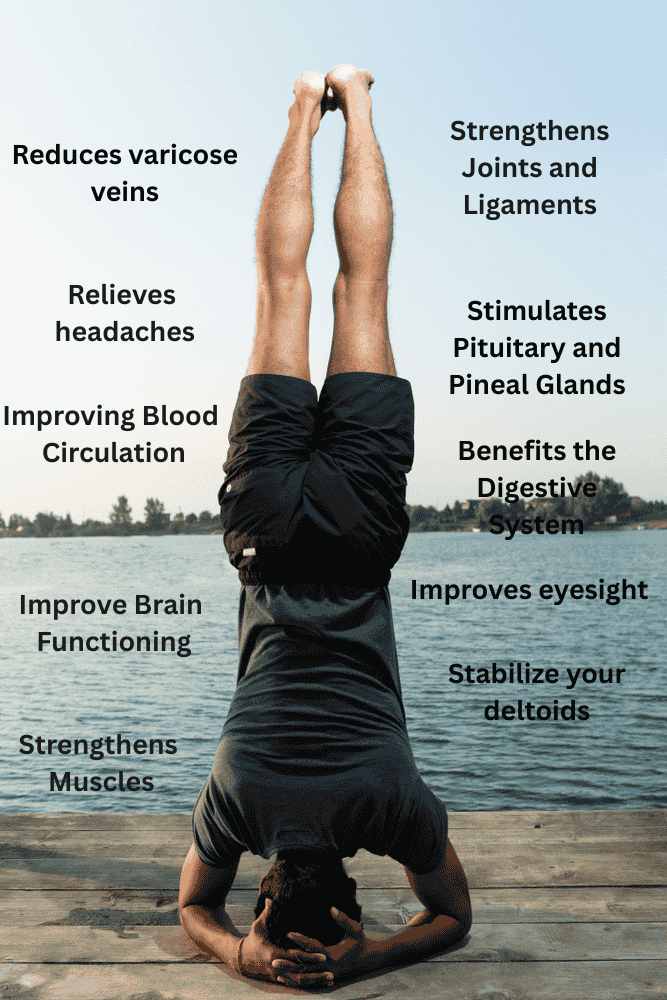
Note: Understanding the reasons how Sirsasana improves focus and mental clarity, or offers other benefits, will motivate you to practise it with confidence and awareness.
Practising Shirshasana stimulates the brain by enhancing blood flow to the head. This improved circulation nourishes brain cells, helping to improve concentration and mental clarity. Here are a few ways headstands can boost mental focus:
1. Enhanced Oxygen Supply: When you perform Shirshasaria, your body is inverted, which allows blood to reach your brain easily. This increased blood circulation brings a higher supply of oxygen and essential nutrients to nourish brain cells.
The result is better brain function, which can lead to better memory, focus, and cognitive understanding. In the long run, this can help with clearer thinking, faster decision-making, and greater overall mental awareness.
2. Improves Mood: Shirshasana activates the endocrine system, and especially the pituitary and pineal glands, which contribute to enhancing the mood. The pose encourages blood flow to these regions, helping to set off the body’s endorphins—natural, feel-good hormones.
These biochemical changes in the brain can reduce stress, lower symptoms of anxiety and depression, and result in a more even emotional balance.
3. Boosts Mind-Body Awareness: Balancing in an inversion pose, such as a headstand, requires your full attention and control of your body. You find your gaze falling inward as you concentrate on inhaling and exhaling, balancing, and activating your core muscles. This increased awareness forces the brain to remain in the ‘Now’ phase and makes the practitioner free from thoughts and distractions.
This mindfulness helps deepen your yoga practice and, over time, promotes better concentration, emotional control, and an overall sense of peace that can be carried into your daily life.
Can Sirsasana (headstands) Help Strengthen the Core and Upper Body?
Sirsasana not only helps bring out mental focus, but it’s also a powerhouse pose for building physical strength and balance. Heads down, supporting yourself in a downwards position activates groups of muscles across the body, particularly in the upper body and core. This is how headstands help in building strength.
Long-Term Benefits of Regularly Practising the Headstand:
When performed on a regular basis, the practice of sirsasana can provide multiple long-lasting benefits for the body and mind.
- Makes Core Stronger: Balancing in Shirshasana engages your abdominal muscles, meaning your deep abdominal muscles, such as the obliques and the transverse, are constantly working to keep your body stabilised in this inverted position. This sustained activation will help build a stronger midsection and enhance balance.
- Builds Upper Body Power: During the pose, most of your body weight rests on your arms, shoulders, and upper back. As these muscles work to keep the body aligned and prevent collapse, they get stronger over time. Regular practice will help develop muscular endurance, toned arms, and secure shoulders.
- Good for Posture and Alignment: To properly maintain Shirshasana, the spine should be straight and stacked, and the weight should be evenly distributed across the shoulders. This promotes good posture by correcting habitual slouching and creates a greater awareness of spinal alignment, both on and off the mat.
Headstand Pros: Repeating Headstands Can Result In
1. Better Circulation and Breathing: The headstand aids in promoting better circulation and respiration, which leads to better overall health of the heart.
2. Improved Strength and Flexibility: Because this asana requires more core strength, which is supported by shoulders and arm strength. Through regular practice, you strengthen these areas and develop flexibility in the spine and legs.
3. Improve Digestion: The upside-down position of Shirshasana directly massages the organs in the digestive system, facilitating metabolism and nutrient absorption.
4. Increased Confidence: Practising this asana means you are challenging yourself, which can directly boost your self-confidence by giving you a sense of achievement.
5. Hormone Regulation: It could regulate hormones by nourishing the endocrine glands to improve hormonal balance for better health in your life.
Myths and Misconceptions About Headstand
Headstand Yoga is one of the most respected yoga poses, yet it has many myths and beliefs associated with it. Being aware of them will help you practise safely and confidently without having any doubt or bad influence:
Myth 1: Headstand Is Dangerous For Your Neck
Most people doing a headstand for the first time shy away from it because of the fear of hurting their neck. Though it’s actually misalignment that puts a strain on the neck, most of the weight in a properly executed headstand is supported by the forearms and shoulders, not the head. You can’t tuck your core and shoulders in to maintain a safe position.
Myth 2: Headstand Can Only Be Done By Advanced Yogis
If you have the right guidance, patience, and prep work, headstands can be practised by anyone. Beginners can use wall support or ask others for help to perform headstands, gradually building strength and confidence.
Myth 3: Sirsasana Is The Cure To All Health Problems
While there are plenty of benefits to doing a headstand—it can increase circulation, core strength, and clarity of mind—it’s no magic cure. As with any yoga practice, its benefits include consistent and mindful practice boosted by a healthy lifestyle.
Myth 4: You Need To Hold a Headstand for a Long Time to Receive Any Benefits
Even small amounts of time, 10-20 seconds for beginners, will increase the tone in muscles/joints and increase blood flow to areas like fingers/toes,S and stimulate our nervous system. As time goes on, you will be able to incrementally increase hold times safely.
Legend 5: Headstand Is All About Balance
Balance is key, but a headstand is also about core strength, shoulder stability, breath control, and the use of your mind.
Read More: Crocodile Pose in Yoga: Benefits, Steps, and Tips
Conclusion
The Headstand (Sirsasana) is more than just a challenging pose in yoga—it’s an incredibly powerful inversion that improves physical strength, mental clarity, and self-awareness. Through conscious practice, right alignment, and direction, headstand can be that powerful tool that supports balance, confidence, and inward focus, on and off the mat.
At Bali Yoga Retreats, we teach students at every level to do headstands through skilled guidance and the highest level of safety in a supportive setting. If you feel like deepening your yoga practice, our 200 Hour Yoga Teacher Training Bali will provide comprehensive foundational training in yoga asanas, alignment, inversions, breathwork, and yogic philosophy. Nestled in the peaceful tropical jungle, you will learn the basics to master poses such as headstand (Sirsasana) with confidence on your path toward becoming a yoga teacher or practising yoga on a deeper level.
Frequently Asked Questions
1. How long should a headstand be held for beginners?
Newcomers can start with a 10–20 second hold and gradually increase as their strength allows.
2. Is it safe for everyone to do a headstand?
No, people with neck, spine, or heart conditions should not perform this headstand. Beginners always practise under supervision.
3. Does a headstand improve digestion?
Yes, mild pressure to your abdomen supports digestion.
4. Headstands to reduce stress and anxiety?
Absolutely, Headstand quiets the nervous system and enhances mental clarity.
5. How many times do I need to practise headstand to get results?
Beginners can train 2–3 times per week. It can be used daily by experienced practitioners.
6. Is it okay to do headstands at home?
Sure, but beginners should also have support or guidance from a wall so they don’t get hurt.
This article is for general information and is not medical advice. If you have a respiratory or heart condition, are pregnant, or are unsure whether these practices suit you, please speak to your doctor before beginning.


 Call Us