


Bali in January: Weather, Crowds & Things to Do
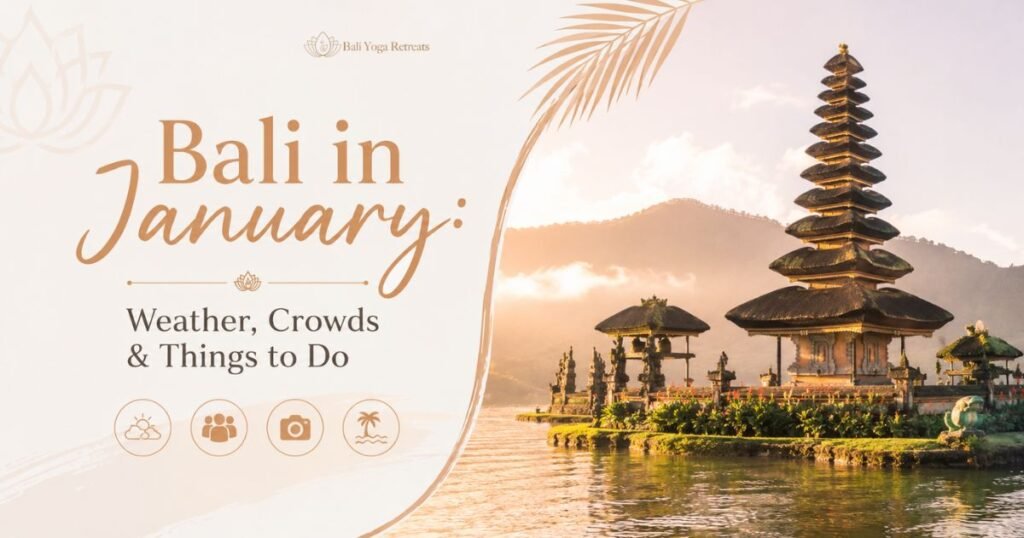
Table of Contents
- Bali Weather in January: The Real Numbers
- So, Is Visiting Bali in January Actually Worth It?
- What’s Actually Happening in Bali in January
- Things to Do in Bali in January
- Beaches Worth Your Time
- Temples That Pull Their Weight
- Waterfalls and Rice Fields
- For Families
- Ubud, Generally
- What to Eat While You’re There
- Shopping Without the Crowds
- Yoga and Wellness in Ubud
- A Few Practical Things Before You Go
- Bottom Line
- Frequently Asked Questions
- What’s the Bali temp in January, really?
- Does it rain the whole day, every day in January in Bali?
- Should I even bother visiting Bali in January?
- What’s worth packing that people forget?
- What are the best things to do in Bali in January?
- Is Bali safe this time of year?
- Do I need a visa?
Thinking about booking Bali in January? Here’s the honest version: it’s the rainy season, which scares off a lot of travellers, but that’s exactly why it’s worth considering. Fewer people, cheaper everything, and the island looks its greenest right after a downpour. You just have to pack smart and stop expecting seven straight days of sun.
Below is what actually matters before you book: the real Bali weather in January, what’s happening festival-wise, where to go, what to eat, and a handful of small things that catch first-timers off guard. Whether you’re calling it “Bali in Jan,” “January in Bali,” or just “that trip we keep talking about,” here’s what you need to know.
Bali Weather in January: The Real Numbers
January falls right in the middle of Bali’s wet season, which typically stretches from November through March. But the Bali climate in January is a bit misleading if you picture nonstop rain; most days still get plenty of sun between the showers.
Here’s the Bali weather in Jan, broken down:
- Bali temp in January hovers around 30–31°C (86–88°F) during the day, dropping to about 24°C (75°F) once the sun’s down
- Rainfall averages 250–300mm for the month, usually arriving as short, heavy bursts rather than a steady drizzle
- Humidity sits high, often above 80%, so it feels hotter than the number on the thermometer suggests
- You still get around 5–6 hours of sunshine most days, rain included
It also depends heavily on where you are. Head up into the hills around Ubud or Kintamani, and January in Bali’s weather turns noticeably cooler, with rain that lingers longer. Stick to the coast, Nusa Dua, Seminyak, and Sanur, and you get warmer air with shorter, more scattered showers.
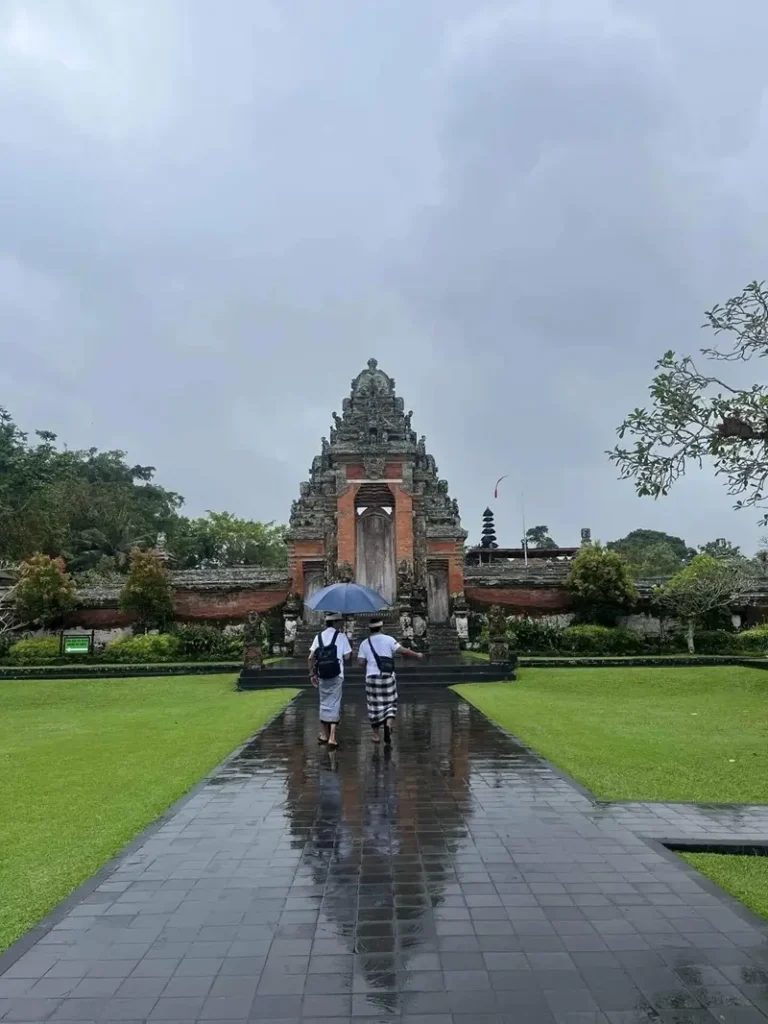
One thing locals will tell you: the rain tends to hit in the afternoon and moves through fast. A lot of people end up structuring their day around it without even realising, sightseeing early, ducking into a café or market when the sky opens up, then heading back out once it’s passed.
So, Is Visiting Bali in January Actually Worth It?
For a lot of travellers, yes. January isn’t Bali’s busy season, and that’s kind of the point:
- Temples, waterfalls, and viewpoints that are shoulder-to-shoulder in July are actually walkable in January
- Flights, hotels, and tours all drop in price
- The rice terraces and jungle look almost unreal after rain, deeper green than you’ll see any other time of year
The catch is obvious: you need to be okay with the occasional wet afternoon. If your idea of a good trip is wall-to-wall sunshine, look elsewhere. If you’d rather skip the crowds and don’t mind adjusting plans around a shower or two, visiting Bali in January holds up well.
If you want the full year-round picture—which months are busiest, driest, and cheapest—we’ve got a separate guide covering Bali month by month.
What’s Actually Happening in Bali in January
Bali January doesn’t mean the island slows down. A couple of things worth knowing about:
- New Year’s celebrations stretch well past the 31st; beach clubs in Seminyak and Kuta keep the fireworks, music, and parties going for several days into January.
- The Suwat Water Festival, held in Suwat village, kicks off with a temple ceremony, moves into traditional games, and ends in a genuinely fun water fight between villagers. It’s one of those events that feels like real Bali rather than a show put on for tourists.
Because ceremony dates follow the Balinese lunar calendar, they shift every year — worth double-checking with your hotel once your dates are locked in.
Things to Do in Bali in January
There’s no shortage of things to do in Bali, rain or not. If you’re mapping out what to do in Bali in January specifically, here’s where to start.
Beaches Worth Your Time
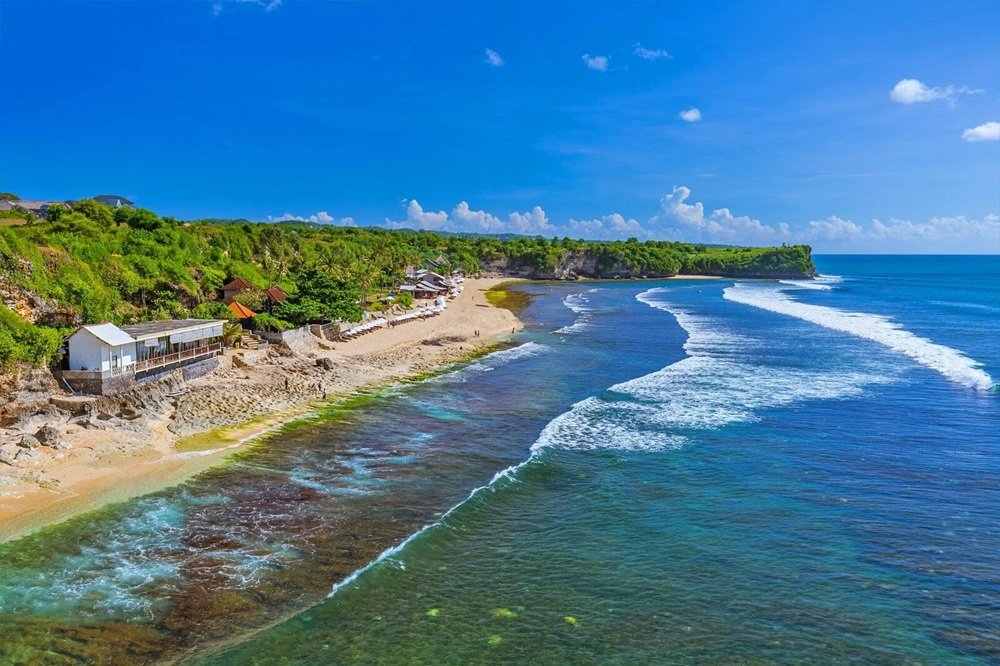
Nusa Dua has calm water and soft sand, which makes it a solid, low-stress choice for families. Sanur’s a quieter option too, known more for sunrise walks than nightlife.
Temples That Pull Their Weight
Besakih is Bali’s largest temple complex, sitting on the slopes of Mount Agung; go here if you actually want to understand Balinese Hinduism, not just photograph a doorway. Speaking of which, Lempuyang Temple’s famous “Gates of Heaven” shot is the one everyone’s seen on Instagram, and it’s worth the hype. Tanah Lot, a temple perched on a rock just off the coast, is best saved for late afternoon and sunset.
Waterfalls and Rice Fields
Tegenungan Waterfall near Ubud is easy to get to and open year-round. The Tegalalang and Jatiluwih rice terraces look especially striking after January’s rain; just bring shoes that can handle mud.
For Families
Bali Safari and Marine Park in Gianyar mixes wildlife with cultural performances, and it’s an easy full-day option if the kids need a change of pace from temples.
Ubud, Generally
Ubud is Bali’s cultural core, and it feels noticeably calmer in January than during peak months. Between the art markets, palaces, galleries, and surrounding rice fields, two or three days here disappear fast.
What to Eat While You’re There
Fewer tourists means shorter lines at the local warungs, genuinely one of the underrated perks of visiting in January. A few dishes worth seeking out:
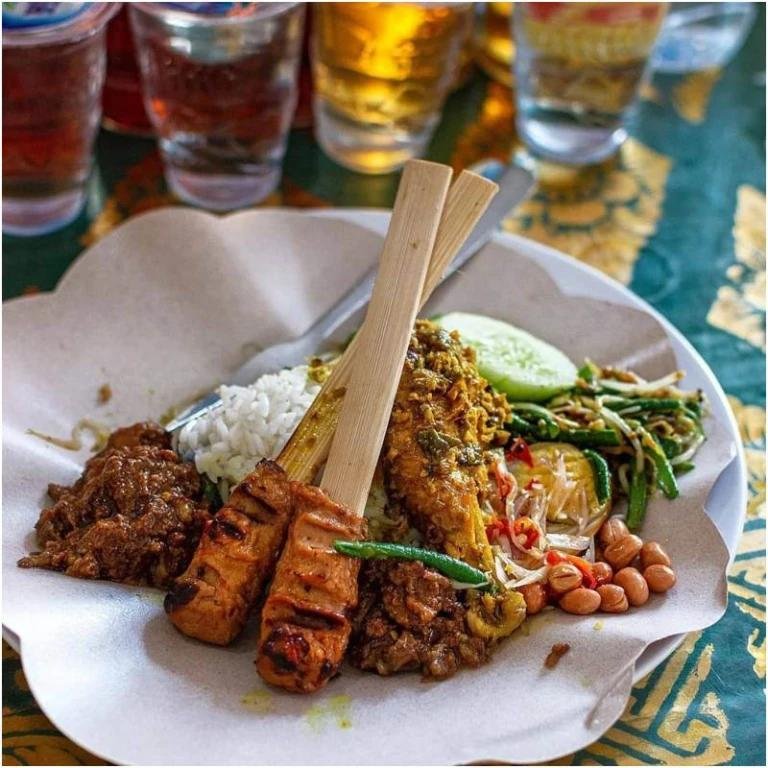
Babi guling is Balinese roast pork, marinated and slow-cooked, usually served with rice, vegetables, and sambal (a chilli sauce with a real kick). Nasi campur, or “mixed rice,” is a good option if you can’t decide what to order, since it’s basically a little of everything: rice, meat, boiled egg, and roasted peanuts. Lawar is a traditional vegetable dish with minced meat and grated coconut worked through it. And nasi goreng, Indonesia’s fried rice, usually comes with a fried egg on top and a smoky-sweet flavour from the soy sauce.
Worth trying beyond that: soto ayam (a light chicken soup), martabak manis (a sweet, stuffed street food pancake), and jaje Bali, a general name for Balinese traditional sweets. If you want to go a step further, several places around Ubud run half-day cooking classes that start at the local market and end with you cooking what you just bought.
Shopping Without the Crowds
Markets are just easier to enjoy when they’re not packed. A few worth the trip:
Ubud Art Market is the obvious stop for textiles, souvenirs, and handmade crafts. Sukawati Art Market leans more toward paintings, wood carvings, and jewellery, often at better prices than you’d expect. And Celuk Village is where Bali’s gold and silversmiths work, a craft that’s been passed down through families for generations.
Yoga and Wellness in Ubud
If part of the trip is about actually slowing down, not just sightseeing, Ubud is where that happens. The name itself comes from the Balinese word for medicine, and the town’s whole identity is built around yoga, healing, and wellness.
January’s slower pace suits this kind of trip particularly well; studios and wellness resorts are quieter, and the countryside around them is at its greenest. This is exactly the season we see the most first-timers show up at Bali Yoga Retreats, since the calmer atmosphere makes it easier to actually settle into a practice instead of rushing between activities.
Whether you’re after a short, restorative Yoga Retreat in Bali or ready to commit to something deeper like our 200 Hour Yoga Teacher Training in Bali, the rain isn’t really an obstacle here; most sessions, workshops, and treatments happen indoors or under cover anyway.

A Few Practical Things Before You Go
- Pack for Rain; Don’t Fight It: A light rain jacket, a small umbrella, and shoes that dry fast will save you a lot of discomfort. Cotton is your enemy in this humidity.
- Rethink Boat Trips If the Sea Looks Off: January swells can make certain routes genuinely unsafe. Ask your operator about conditions before you commit.
- Stick to Bottled or Filtered Water: Tap water isn’t safe here, and it matters even more during wet season.
- Grab and Gojek are Your Friends: Both apps handle taxis and bike rides reliably and usually beat flagging down a cab.
- Bug Spray, Daily: Mosquitoes are more active when it’s wet.
- Cover Up at Temples: Shoulders and knees, plus a sarong for sacred spaces; most sites rent them if you don’t bring your own.
- Sort Your Visa Ahead of Time: Most travellers can enter on a Visa on Arrival (VOA) or e-VOA, good for 30 days with one 30-day extension available. You’ll need a passport valid for at least six months and to fill out Indonesia’s e-arrival card online before you land. Rules shift now and then, so it’s worth a quick check on the official immigration site close to your travel date.

Bottom Line
A trip to Bali in January means trading a few rainy afternoons for smaller crowds, lower prices, and scenery that’s arguably at its best all year. Pack accordingly and stay loose with your schedule, and you’ll get a version of the island that feels calmer and, honestly, a bit more real than the peak-season rush.
If you’re building in time to actually rest, this is where Bali Yoga Retreats comes in; whether that means a few days on a yoga retreat in Bali or the full 200-hour yoga teacher training in Bali, January might be the best month of the year to make that kind of trip happen.
Read More: Why Visit Bali in February: Weather, Crowds, and Travel Tips
Frequently Asked Questions
What’s the Bali temp in January, really?
Daytime highs sit around 30–31°C (86–88°F), with humidity making it feel warmer still. Nights cool down to roughly 24°C (75°F).
Does it rain the whole day, every day in January in Bali?
Not really. Rain tends to come in short, heavy bursts, often in the afternoon, rather than lasting from morning to night. Most days still have a decent window of sun.
Should I even bother visiting Bali in January?
If you can live with the occasional wet afternoon, it’s genuinely a good call: smaller crowds, lower prices, and scenery that looks better than it does in the dry months.
What’s worth packing that people forget?
Quick-dry shoes, a real rain jacket (not just an umbrella), bug spray, and at least one outfit that covers shoulders and knees for temple visits.
What are the best things to do in Bali in January?
Ubud, Tanah Lot, Besakih, Lempuyang, Nusa Dua Beach, Tegenungan Waterfall, and Bali Safari & Marine Park cover most of what people come to Bali for, and all of them work fine in January.
Is Bali safe this time of year?
Mostly, yes; the same common-sense rules apply everywhere: don’t wander unlit streets alone at night, keep an eye on your things, and skip boat trips if the sea’s rough.
Do I need a visa?
Most nationalities do a visa on arrival or e-VOA, valid for 30 days with one extension. Double-check the official Indonesian immigration site for your specific passport, since these things do change.
This article is for general information and is not medical advice. If you have a respiratory or heart condition, are pregnant, or are unsure whether these practices suit you, please speak to your doctor before beginning.


 Call Us