


Bali Travel Guide for First-Time Yoga Students: Everything to Know Before You Go

Table of Contents
- Why Bali Is Popular Among Yoga Students
- When to Travel to Bali: Timing the Trip Around the Program
- Bali Travel Information Guide for First-Time Visitors
- What a First Yoga Trip to Bali Actually Involves
- Packing for Practice: What Yoga Students Actually Need
- Local Culture and Etiquette Yoga Students Should Know
- Budgeting the Full Trip, Not Just the Course
- Food, Transportation, and Staying Connected
- Health and Safety Tips for Yoga Students Traveling to Bali
- Common Mistakes First-Time Yoga Students Make in Bali
- Questions to Ask Before Booking a Yoga Program in Bali
- Preparing for a Retreat or Teacher Training Experience
- Final Checklist Before Traveling to Bali
- Frequently Asked Questions
- What travel documents are required to travel to Bali?
- What is the best time to travel to Bali for yoga students?
- How much does a trip to Bali cost for yoga students?
- Is Bali safe for solo yoga travelers?
- What should first-time yoga students pack for a Bali trip?
- What are the most useful Bali travel tips for someone attending their first yoga program?
Somewhere between booking the flight and actually landing in Bali, most first-time yoga students hit the same wall: they know why they’re going, but not quite how to get ready for it. The yoga part feels manageable. It’s everything around it, what to pack, how much to budget beyond the course fee, what the first week actually feels like, that tends to get skipped over.
This Bali Travel Guide fills that gap. It’s built specifically for someone who wants to travel to Bali for the first time to join a yoga program, covering the practical groundwork that rarely makes it into a typical travel guide but ends up mattering the most once boots hit Balinese soil.
Why Bali Is Popular Among Yoga Students
Bali earned its nickname, the “Island of the Gods,” honestly. Balinese Hinduism shapes daily life here in a way that’s hard to find elsewhere; small offerings appear on doorsteps every morning, temple bells carry across rice paddies, and rituals happen in the background of ordinary days. For students drawn to yoga’s spiritual roots, that atmosphere does a lot of the work before class even begins.
A few practical reasons keep students coming back, too:
- A genuinely international yoga community, where finding study partners, teachers, and long-term practitioners is easy.
- Course pricing that’s noticeably lower than equivalent programs in the US, UK, or Australia; a 200-hour yoga teacher training in Bali often costs a fraction of the same certification elsewhere.
- Schools built into forests, along rivers, or beside rice fields rather than converted city studios.
- The option to ease in gently: a shorter yoga retreat in Bali suits students who want the experience without committing to a full teacher training right away.
Many first-time visitors also ask about the best time to travel to Bali for yoga specifically. In general, the island’s dry season tends to suit outdoor practice best, though schools run programs comfortably year-round thanks to covered and indoor practice spaces.
When to Travel to Bali: Timing the Trip Around the Program
Deciding when to travel to Bali usually comes down to matching the program dates with personal preference around weather and crowd levels, since most yoga schools run courses throughout the year regardless of season.
That said, the best time to travel to Bali for a first yoga trip is generally during the drier months, when outdoor sessions, excursions, and free-time exploring are easiest to plan around. Students who prioritize quieter class sizes sometimes deliberately choose the less crowded months instead, trading a little unpredictability in the weather for a calmer overall experience.
Bali Travel Information Guide for First-Time Visitors
A few basics are worth locking down before anything else, and this section of the Bali Travel Guide covers exactly that.
Bali is reached almost entirely by air, through Ngurah Rai International Airport (DPS) in Denpasar, with direct and connecting flights from most major regions. Anyone who plans to travel to Bali for the first time should also expect a fairly straightforward entry process, provided the basics—passport validity, entry documentation, and return travel are sorted ahead of time.
Indonesian (Bahasa Indonesia) is the national language, and Balinese is spoken widely at the local level, but English covers nearly every situation a visitor runs into: tourist areas, yoga schools, and hospitality settings. Language is rarely a real barrier here.
The currency is the Indonesian Rupiah (IDR). ATMs are common wherever there’s any tourist traffic; most hotels and restaurants take cards, and carrying some cash still helps at markets and smaller local vendors. This kind of Bali travel information guide detail sounds small, but it’s the sort of thing that saves a genuinely awkward first afternoon. Building this into a personal Bali travel information guide before departure, even a simple notes app checklist, makes the first day noticeably smoother.
What a First Yoga Trip to Bali Actually Involves
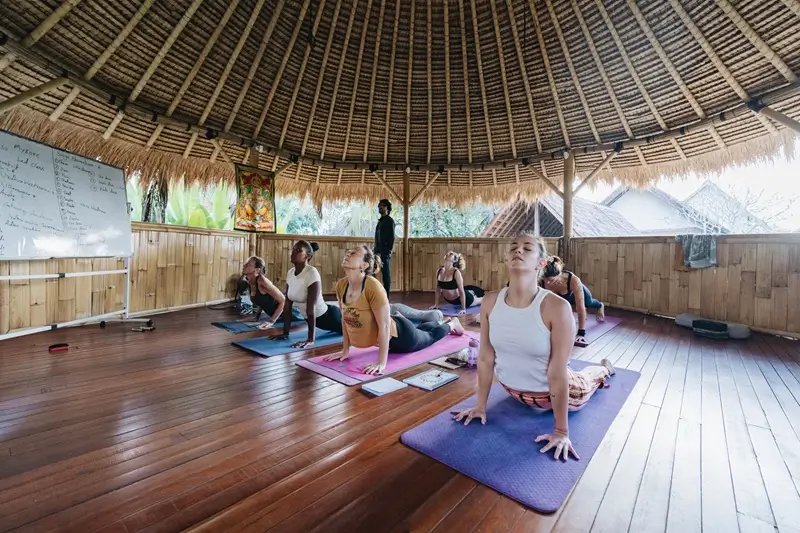
It helps to know, going in, that this isn’t a typical vacation itinerary. Most training and retreat schedules start early, often before 6 a.m. and run through structured blocks of asana, philosophy, pranayama, and meditation, with breaks for meals in between. Evenings are usually calmer, sometimes with optional sessions or free time.
For students used to a more relaxed travel experience in Bali—beach days, late nights, spontaneous plans—this structure can feel like an adjustment at first. It’s worth mentally preparing for a routine that looks more like a schedule than a holiday, at least for the length of the program.
A few things that catch first-timers off guard:
- The first two or three days are the hardest. Jet lag, new time zone, unfamiliar food, and an early wake-up time all hit at once. It gets easier by around day four.
- Programs are more physically and mentally demanding than expected, especially teacher trainings that combine long practice hours with study sessions.
- Free time is more limited than people assume, particularly during multi-week trainings. Planning big side trips mid-course usually isn’t realistic.

Packing for Practice: What Yoga Students Actually Need
Bali runs warm and humid year-round, so packing should lean toward light, breathable fabric over anything heavy.
For the practice itself:
- Two or three sets of breathable yoga wear; laundry service is cheap and common, so there’s no need to overpack
- A lightweight long-sleeve layer for early morning sessions, which can be cooler than expected
- A personal yoga mat, if there’s a strong preference, though most schools supply one
- A journal or notebook, useful for philosophy and teaching methodology sessions
For general travel:
- Comfortable sandals plus one pair of walking shoes
- Sunscreen and insect repellent
- A reusable water bottle
- A sarong or light scarf for temple visits, where shoulders and knees need covering
- A small first-aid kit and any personal medication
- A universal power adapter, since Indonesia uses Type C and F outlets
Local Culture and Etiquette Yoga Students Should Know
Balinese Hinduism runs through daily life here in a way visitors are expected to respect, even without being told directly.
At temples, shoulders and knees should stay covered, and a sarong is often required at the entrance. Small woven offerings called canang sari appear on sidewalks and doorsteps every morning; stepping around them, never on them, is a basic courtesy locals notice immediately.
Inside a yoga school, etiquette shifts slightly. Arriving a few minutes early, keeping phones off during sessions, and following the school’s guidance on silence during certain practices (common during meditation or yoga nidra) all matter more than they might elsewhere. Many schools open with a short welcome or orientation covering these expectations, which is worth paying close attention to rather than treating as a formality.

Budgeting the Full Trip, Not Just the Course
One thing that trips up first-timers: the course or retreat fee is rarely the whole cost of the trip. A realistic budget also needs to account for:
- Flights, which vary heavily by season and origin
- The visa fee and tourist levy required to enter Indonesia
- Airport transfers and local transport during free time
- Any meals not included in the program (some schools include all meals, others include only some)
- Extra days before or after the program for rest or sightseeing
- Incidentals, laundry, snacks, souvenirs, spa visits
Flights also tend to cost less outside peak periods, which ties directly into finding the best time to travel to Bali that balances weather, crowd levels, and airfare together, rather than looking at any one factor alone.
Bali is generally affordable relative to Western countries. A local meal can cost as little as IDR 50,000–150,000 (roughly USD 3–10), and many training programs bundle accommodation and food into the course fee, which helps keep day-to-day spending predictable once the program starts.
Food, Transportation, and Staying Connected
This part of the Bali Travel Guide covers food, getting around, and staying connected once the program begins.
Bali, especially areas like Ubud, has a strong plant-based food culture, with vegetarian, vegan, and gluten-free options common enough that dietary needs rarely limit where a student can eat. Most yoga schools also prepare meals specifically suited to a yogic diet as part of their programs.
Getting around usually comes down to a few options: scooter rental (cheap, but requires an international driving permit and comfort with local traffic), ride-hailing apps for cars and motorbike taxis, or a private driver, which many first-timers prefer for airport transfers and day trips until they’re more familiar with the area.
For staying connected, a local SIM card or an eSIM set up before departure both work well. Most schools also provide on-site Wi-Fi, useful for keeping in touch with family or handling anything tied to a certification program.

Health and Safety Tips for Yoga Students Traveling to Bali
The following Bali travel tips focus specifically on staying well during a physically demanding program, since a training or retreat asks more of the body than an average holiday.
Bali is generally considered safe for first-time and solo travelers, yoga students included, as long as a few basic precautions are taken.
- Travel insurance that covers medical treatment and activity-related injury is worth having, particularly for physically intensive programs.
- Hydration matters more than expected; heat, humidity, and daily practice add up quickly.
- Stick to bottled or filtered water rather than tap water.
- Use established pharmacies and clinics for anything medication-related, and carry a copy of any prescriptions.
- Keep valuables secured, especially in shared accommodation or during early morning sessions when rooms are often left unattended.
Common Mistakes First-Time Yoga Students Make in Bali
A few patterns show up again and again with first-timers. These Bali travel tips come directly from the mistakes students tend to repeat:
- Overpacking for the Wrong Things: Heavy clothing and excess yoga gear take up space that could go toward essentials like a rain layer or first-aid basics.
- Underestimating the Schedule: Assuming there will be plenty of free time for sightseeing during a training, then realizing the days are fuller than expected.
- Skipping a Rest Day After Arrival: Jumping straight into practice without adjusting to the time change makes the first few days harder than they need to be.
- Not Confirming What’s Included: Meals, laundry, airport pickup, and excursions vary a lot between schools; assuming something is included without checking can lead to unexpected costs.
- Ignoring Local Etiquette Until It’s Pointed Out: A little research beforehand on temple and cultural etiquette avoids awkward moments later.
- Not Researching the Best Time to Travel to Bali Before Locking in Dates: Weather affects outdoor sessions and excursions more than people expect, so it’s worth checking before booking.
Questions to Ask Before Booking a Yoga Program in Bali
Before committing to a program, it’s worth getting clear answers on:
- What’s included in the course fee: meals, accommodation, transport, and excursions?
- Is the school Yoga Alliance accredited, and at what level?
- What’s the daily schedule, and how much free time is built in?
- What’s the cancellation or refund policy?
- How many students are in each intake, and what’s the teacher-to-student ratio?
- Is airport pickup included or arranged separately?
Bali Yoga Retreats, along with most established schools, typically answer these directly on their program pages or through a welcome guide sent before arrival, worth reading closely rather than quickly.
Preparing for a Retreat or Teacher Training Experience
Whether the plan is a short yoga retreat in Bali or a longer 200 Hour Yoga Teacher Training in Bali, a bit of preparation goes a long way.
Reviewing the daily schedule ahead of time helps set expectations, since most programs start early with meditation or pranayama before the day gets going. Building some familiarity with basic postures beforehand makes the first week of a teacher training less overwhelming, and going in with realistic expectations helps too. These programs blend physical practice with philosophy, anatomy, and teaching skills, not just asana.
Comfortable, non-restrictive clothing tends to work better than typical activewear, given how much time is spent seated or on the floor. And since many schools follow a fairly structured daily rhythm with limited outside distraction, being open to that pace makes the adjustment easier.
Final Checklist Before Traveling to Bali
This last section of the Bali Travel Guide pulls everything together into one quick-reference list, and it doubles as a set of Bali travel tips worth revisiting a few days before departure:
- Passport and entry requirements sorted well in advance
- Travel insurance purchased
- Flights and airport transfer booked
- Program confirmation and welcome guide saved
- Full trip budget mapped out, not just the course fee
- Weather-appropriate clothing and practice gear packed
- Basic first-aid kit and personal medication packed
- Local SIM or eSIM arranged
- Questions to the school answered before arrival
- At least one buffer day built in after landing
Anyone still deciding when to travel to Bali should treat this checklist as the final step, not the first; the timing decision matters less once the practical groundwork above is already in place.
Read More: Best Time to Visit Bali: Weather, Crowds & Monthly Breakdown
Frequently Asked Questions
What travel documents are required to travel to Bali?
Requirements vary by nationality, so it’s worth checking current entry rules directly with Indonesian immigration closer to the travel date, along with any required health or tourist levy documentation.
What is the best time to travel to Bali for yoga students?
The dry season generally offers the most consistent weather for outdoor practice, though many schools run comfortably year-round with covered practice spaces for the wetter months.
How much does a trip to Bali cost for yoga students?
Costs depend on lifestyle and length of stay, but many yoga schools bundle accommodation and meals into the program fee, which makes daily spending during the course fairly predictable.
Is Bali safe for solo yoga travelers?
Bali is generally regarded as safe for solo travelers, including yoga students, as long as basic precautions like using reputable transport and staying insured are followed.
What should first-time yoga students pack for a Bali trip?
Breathable clothing, a light layer for early sessions, sandals, sunscreen, a reusable water bottle, and a sarong for temple visits cover most of what’s needed.
What are the most useful Bali travel tips for someone attending their first yoga program?
Confirm what’s included in the course fee, budget for more than just the program cost, build in a rest day after arrival, and go in expecting a structured daily schedule rather than a typical holiday pace.
This article is for general information and is not medical advice. If you have a respiratory or heart condition, are pregnant, or are unsure whether these practices suit you, please speak to your doctor before beginning.


 Call Us