


Bali in March: What Travellers Should Actually Expect

Table of Contents
- Is March Worth Booking?
- What’s Actually Changing on the Island This Month
- Bali Weather in March
- Nyepi: The Day the Island Goes Quiet
- Choosing Where to Stay in March
- Things to Do in Bali in March
- Yoga and Wellness Travel in March
- Crowds and Prices in March
- What to Pack for Bali in March
- How March Compares to Nearby Months
- Where This Leaves You
- Frequently Asked Questions
- Is Bali in March considered wet season or dry season?
- How many rainy days does Bali typically get in March?
- Will Nyepi disrupt a trip planned for March?
- Are flights affected around Nyepi?
- Is Uluwatu or Canggu a better base for surfing in March?
- Is March a reasonable month for a first trip to Bali?
- How does March compare to April for weather?
- Is March suitable for someone joining a yoga retreat for the first time?
March sits in an odd spot on Bali’s calendar. The wet season hasn’t fully let go, and the dry months haven’t quite arrived either, so anyone researching Bali in March is really asking about a month of transition. Some days bring hours of strong sun and calm water; others bring a fast-moving downpour that clears within the hour. This mix confuses a lot of first-time visitors, because the internet tends to sort Bali into a simple rainy-season-or-dry-season split that doesn’t hold up well in March.
This guide looks at what March in Bali actually involves: the weather patterns, the crowd levels, the cultural calendar (including Nyepi, the island’s day of silence), and the kind of traveller who tends to get the most out of visiting during this particular window.
Is March Worth Booking?
March generally suits travelers who don’t mind occasional rain in exchange for lighter crowds and lower prices than the July-to-September peak. It’s a weaker choice for anyone who needs guaranteed sunshine on every day of a short trip, since conditions can shift from one afternoon to the next. The real answer depends less on the calendar and more on how much flexibility a traveler is willing to build into the schedule.
People who tend to enjoy Bali in March include longer-stay visitors, yoga and wellness travelers who spend a lot of time near their accommodation anyway, and anyone who prefers a quieter version of popular spots. People who tend to be disappointed include those on a four- or five-day beach holiday with their heart set on wall-to-wall sun or families trying to time a trip around consistently dry outdoor days.

What’s Actually Changing on the Island This Month
Bali doesn’t run on four seasons the way much of the world does. It follows a wet season (roughly November through March) and a dry season (roughly April through October), and March sits right at the seam between the two. Compared to January and February, rain becomes less constant and more localised; one part of the island can be soaked while another stays dry a short drive away. Compared to April, though, March still carries noticeably more cloud cover and a higher chance of a wet afternoon.
That shift doesn’t happen on a fixed date. Some years the transition feels well underway by the second week of March; other years it drags closer to April. This is why forecasts more than a week out aren’t especially reliable for Bali March travel; a short-range forecast checked a few days ahead is more useful than planning around seasonal averages alone.
Bali Weather in March
Daytime temperatures in March typically sit between 27°C and 32°C (81–90°F), with overnight lows rarely dropping below 24°C (75°F). Humidity stays high, generally in the 80–85% range, which tends to make the heat feel more intense than the numbers suggest, particularly around midday.
Rainfall is the part most people want a straight answer on, and it varies by year and region, but a reasonable working estimate is around 18 to 20 rainy days across the month, with total rainfall commonly cited in the 200–280 mm range. That figure is misleading if read as “rain most of every day.” In practice, March showers tend to be short and heavy rather than long and steady: an hour of hard rain in the late afternoon, followed by clear skies by evening, is a common pattern. Prolonged, all-day rain happens, but it’s the exception rather than the rule.
Cloud cover is more consistent than in the driest months, so uninterrupted sunshine on every day of a trip shouldn’t be assumed. Sea conditions on the south coast are generally calm to moderate, though swell and visibility can change quickly after a storm passes through.
| Factor | Bali in March |
| Weather | Transitional—a mix of sunny stretches and short rain systems |
| Rain | Around 18–20 rainy days, usually short bursts rather than all-day rain |
| Humidity | High, typically 80–85% |
| Crowds | Moderate — lighter than July to September, busier than the deepest wet-season months |
| Prices | Below peak season on average, though exact dates still cause swings |
| Outdoor activities | Workable most days with a flexible schedule; mornings are the safer bet |
| Yoga and wellness travel | Well suited, especially for longer or indoor-based programs |
Nyepi: The Day the Island Goes Quiet
March is also when Bali observes Nyepi, the Balinese Day of Silence and the start of the Saka new year. The exact date shifts every year because it follows the Balinese lunar calendar rather than the standard one, so it doesn’t fall on the same day annually. Anyone planning a March Bali itinerary around specific dates should check the year’s exact date rather than assume it stays fixed.
The evening before Nyepi usually brings the Ogoh-Ogoh parade, where villages carry large papier-mâché and bamboo effigies representing negative spirits through the streets before symbolically destroying them. It’s loud, visual, and worth seeing if the timing lines up with a visit.
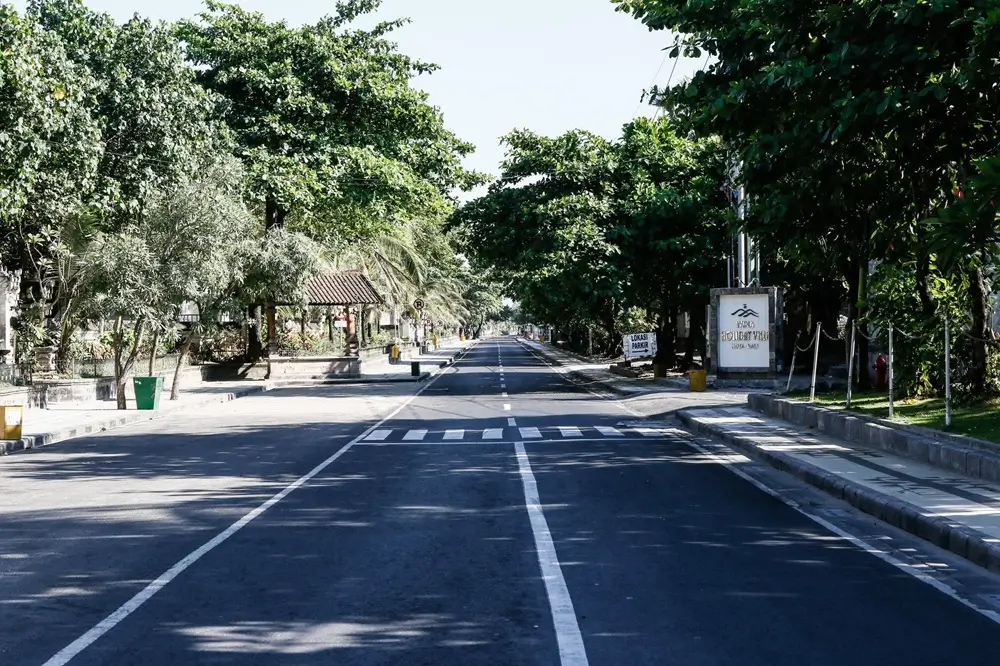
Nyepi itself is the opposite experience. For 24 hours, the island shuts down almost entirely: the airport closes, streets empty out, lights stay off after dark, and even hotel guests are asked to stay quiet and out of view from the road. It isn’t a normal travel day; sightseeing, beach time, and transport all pause, but for travellers already on the island, it’s often described as one of the more memorable things they didn’t plan for. Anyone flying in or out during this window should build a buffer day around it, since flights and local transport are affected for the full 24 hours.
Choosing Where to Stay in March
Location matters more in March, because rain patterns aren’t identical across the island.
Ubud, inland and forested, gets more frequent short showers and stays noticeably more humid, but it’s also where most yoga studios and wellness centers are based, a reasonable fit for anyone spending a good part of each day indoors or in class regardless of weather. Canggu and Seminyak, on the southwest coast, see a bit less rain and offer plenty of restaurants and beach clubs to fall back on if a shower rolls through.
Uluwatu, on the dry southern peninsula, is generally the driest pocket of the island in March, a sensible base for surfers and beach-focused travelers. Sanur suits families and slower trips, with calmer water than the surf beaches further south. Nusa Dua leans more resort-driven and self-contained. North Bali, around Lovina and the mountain lakes, runs cooler with its own rainfall pattern and suits travelers wanting a quieter, less touristy pace.
Things to Do in Bali in March
March conditions favor a flexible plan over a tightly scheduled one. A few things hold up well:
- Morning Outdoor Activities: Rain tends to build through the afternoon, so treks, rice-terrace walks, and temple visits scheduled before midday go more smoothly than the same plans booked for 3 pm.
- Waterfalls: March is a strong month for waterfalls precisely because of the rain; flows at spots like Tegenungan or Nungnung tend to run fuller than during the driest months.
- Snorkeling and Diving on Calmer Days: Visibility depends on recent rainfall and runoff, so it’s worth checking conditions the same week rather than assuming a fixed schedule.
- Cultural Sites and Museums: Temples, art museums, and craft workshops make sensible options when a shower shows up, since they don’t depend on clear skies.
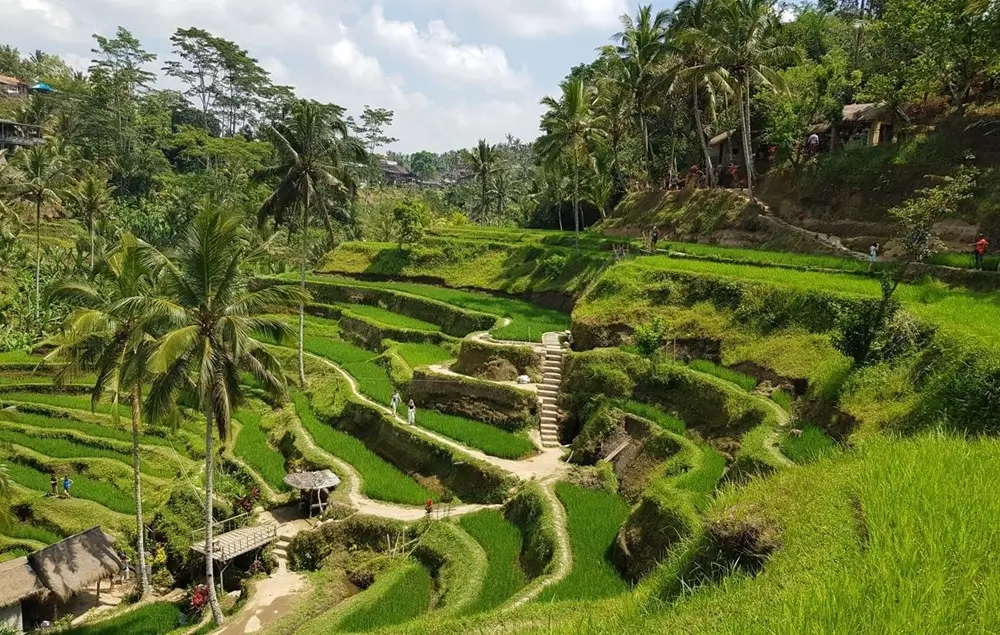
- Rice Terrace Walks Early in the Day: Tegalalang and Jatiluwih look their most vivid right after rain, and mornings avoid both the heat and the tour groups.
- Cooking Classes and Spa Treatments: Both work regardless of weather and are commonly used to fill a rained-out afternoon.
None of this means cancelling outdoor plans altogether. It mostly means building in a backup and not scheduling the only free morning of a trip around something completely weather-dependent.
Yoga and Wellness Travel in March
March works reasonably well for wellness-focused travel, mainly because it doesn’t rely on being outdoors all day. Studios, retreat centers, and spa facilities run normally regardless of rain, and lighter crowds compared to peak season often mean smaller class sizes and easier bookings.
There’s a meaningful difference between a short wellness break and a longer training commitment, and March can suit both for different reasons. A traveler with a week or two available might look at a yoga retreat in Bali built around daily practice, workshops, and recovery time, without needing the weather to cooperate every single day.
Someone weighing a longer stay might instead consider a 200 Hour Yoga Teacher Training in Bali, which typically runs three to four weeks and involves enough structured indoor time that a few rainy afternoons don’t disrupt the schedule much. The choice usually comes down to available time and whether the goal is rest versus certification.
Programs based in Ubud are the most common option during March, partly because the town’s yoga infrastructure is well established and partly because the surrounding rice paddies and jungle tend to look their best right after rain. Bali Yoga Retreats is one of several operators running programs in the area during this period, alongside independent studios and smaller retreat centers.

Crowds and Prices in March
March sits in a middle zone for both crowds and pricing, though it’s worth being specific about what that means rather than calling it simply cheap or quiet.
Compared to the July–September high season, March is noticeably less crowded; popular spots like Tegalalang or Uluwatu Temple are easier to visit without a wait. Compared to the deepest wet-season months of January and February, though, March can pick up in the back half of the month as European and Australian school breaks approach, along with any dates overlapping Nyepi.
Prices follow a similar pattern. Flights and accommodation are generally more affordable than peak-season rates, but this isn’t guaranteed for every date; a villa in Canggu over a weekend can still cost more than the same room midweek, and prices around any holiday period spike regardless of season. For anyone weighing a March Bali trip against booking into April instead, price is often the deciding factor, since April’s clearer weather usually comes with higher demand. Booking a few weeks ahead tends to give more control over both price and room choice, even in a lower-demand month.
What to Pack for Bali in March
The heat and humidity make lightweight, breathable fabrics more useful than heavier travel clothing; cotton or linen dries faster and feels less sticky through the middle of the day. A light rain jacket or packable poncho earns its space in the bag more in March than in the drier months, since short downpours arrive with little warning. Quick-dry footwear, or sandals that don’t mind getting wet, handle sudden rain better than sneakers.
A few other things worth including: reef-safe sunscreen, since UV levels stay strong even under clouds; a modest layer covering shoulders and knees for temple visits; swimwear for the days that do stay clear; and a small day bag that can hold a rain cover along with the usual essentials. Anyone attending yoga or wellness sessions should pack breathable practice clothing, since studios in Ubud in particular can run warm and humid even with fans or air conditioning.
How March Compares to Nearby Months
February tends to carry more consistent rain and higher humidity than March, with fewer dry stretches. April is usually the more reliable month if guaranteed sunshine matters more than avoiding crowds; it marks the real start of the dry season, with noticeably less rain and clearer skies, though also a gradual rise in visitor numbers and prices. March lands between the two: wetter and quieter than April and drier and busier than February. The decision usually comes down to whether flexibility or certainty matters more for that trip.
Read More: Bali in April: Weather, Temperature & Things to Do
Where This Leaves You
March in Bali is a trade-off month rather than an obvious yes or no. The weather is warm, humid, and unpredictable day to day, with short, heavy rain rather than constant drizzle for most of the month. Crowds and prices sit in a comfortable middle ground—busier and pricier than the depths of the wet season, calmer and cheaper than the July-to-September rush. Nyepi adds a cultural layer few other months can offer, though it also means one full day where travel plans have to pause.
Travelers who do best in March tend to leave room in the schedule: morning activities, a backup plan for rain, and accommodation chosen with the local microclimate in mind. Anyone planning a longer wellness stay, including programs run by operators such as Bali Yoga Retreats, tends to find March a practical window, since indoor, studio-based schedules aren’t affected by an afternoon shower the way a beach day would be. Travelers who want guaranteed sun for a short trip, or who are booking around a fixed outdoor event, may be better served by April or later in the dry season. Either way, a short-range forecast checked closer to the travel date beats planning around seasonal averages alone.
Read More: Best Time to Visit Bali: Weather, Crowds & Monthly Breakdown
Frequently Asked Questions
Is Bali in March considered wet season or dry season?
Technically still wet season, but it’s the tail end of it. Rain becomes less constant as the month goes on, and by the final weeks conditions often start resembling the early dry season, especially in drier pockets like Uluwatu.
How many rainy days does Bali typically get in March?
Historical averages suggest around 18 to 20 days with measurable rain, though “rainy” usually means a short afternoon shower rather than a washed-out day. Totals shift from year to year, so this is a general guide rather than a guarantee.
Will Nyepi disrupt a trip planned for March?
It can, for one calendar day. The airport closes, streets empty, and outdoor movement is restricted for 24 hours during Nyepi itself. The exact date changes annually, so it’s worth checking it against specific travel dates before booking flights.
Are flights affected around Nyepi?
Yes. Ngurah Rai International Airport closes for roughly 24 hours during Nyepi, so no flights land or depart. Travelers flying in or out of Bali in March should build a buffer day around the Nyepi date rather than scheduling arrivals or departures on it.
Is Uluwatu or Canggu a better base for surfing in March?
Uluwatu tends to be drier and pairs well with its consistent reef breaks, while Canggu offers a more social base with beach breaks suited to a wider range of skill levels. Neither is clearly better — the choice depends more on surf experience than on March weather specifically.
Is March a reasonable month for a first trip to Bali?
It can be, particularly for travelers who value lower prices and lighter crowds over guaranteed sunshine. First-time visitors with a fixed short itinerary and specific outdoor plans may find April or the drier months a safer bet.
How does March compare to April for weather?
March is generally wetter, cloudier, and feels more humid, while April marks a more reliable shift into the dry season. April brings clearer skies on average, but also a rise in both visitor numbers and prices.
Is March suitable for someone joining a yoga retreat for the first time?
Generally yes. Most retreat and studio schedules run indoors or under cover, so rain has limited impact on daily programming. Lighter overall crowds in March can also mean more attention in smaller classes compared to peak months.
This article is for general information and is not medical advice. If you have a respiratory or heart condition, are pregnant, or are unsure whether these practices suit you, please speak to your doctor before beginning.


 Call Us